
Futsal vs Soccer: 10 Key Differences Explained
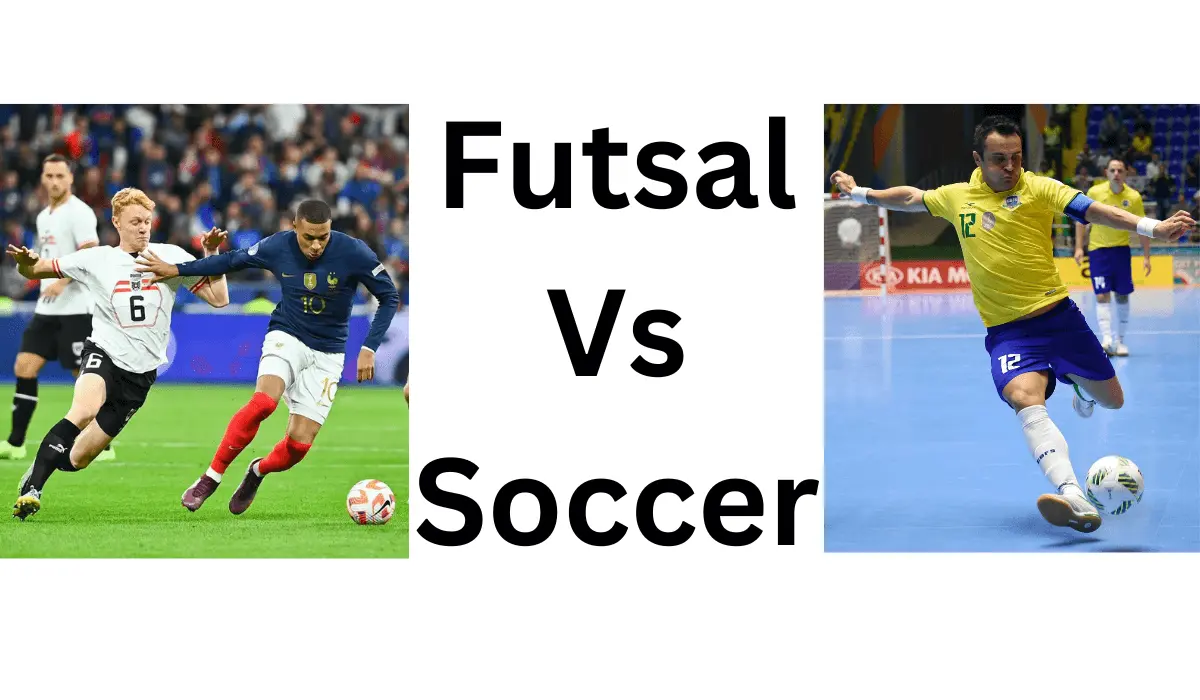
Quick Answer: Futsal and soccer are distinct sports. Futsal features 5 players per team on a hard indoor court with a smaller, low-bounce ball (Size 4), no offsides, and 20-minute halves. Soccer has 11 players on a grass field with a larger ball (Size 5), offsides rule, and 45-minute halves. Futsal emphasizes technical skill in tight spaces; soccer focuses on tactics, endurance, and positioning across larger areas.
What is Futsal vs Soccer?
While both sports involve kicking a ball into a goal, futsal and soccer offer fundamentally different playing experiences designed for different environments and skill development.
Quick Overview
Futsal:
- Indoor sport played on basketball-sized hard court
- 5 players per team (including goalkeeper)
- Smaller, heavier ball with minimal bounce
- Fast-paced, technical, skill-focused
- Governed by FIFA with standardized international rules
Soccer (Football):
- Outdoor sport played on large grass or turf field
- 11 players per team (including goalkeeper)
- Standard larger ball with normal bounce
- Strategic, tactical, endurance-focused
- World’s most popular sport
Beyond the Surface
While both share the love for a round ball, their benefits bloom in different gardens:
⚽ Futsal cultivates mesmerizing technical skills, making you a magician with the ball ⚽ Soccer builds unwavering fitness and tactical awareness, transforming you into a dominant force
Embrace both disciplines and become a well-rounded player, equipped to thrive on any battlefield, be it the compact futsal court or the expansive soccer pitch.
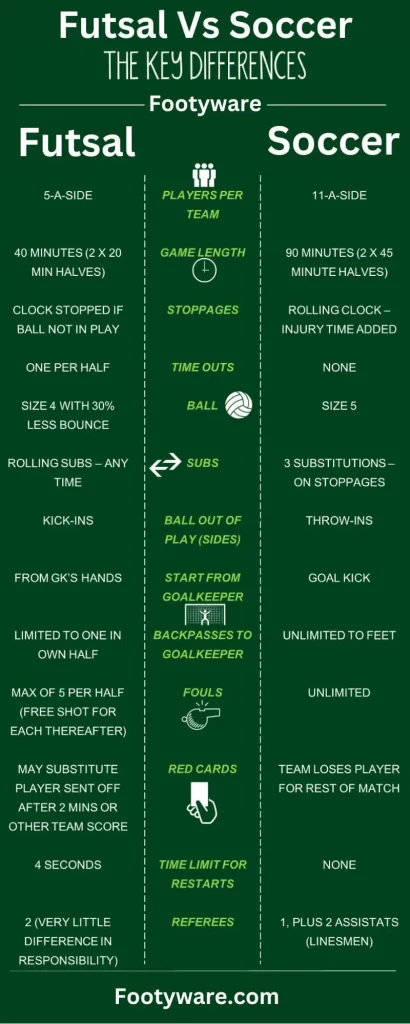
This tale of contrasts, told through the lens of the beautiful game, promises an exhilarating journey for athletes of all ages and skill levels. Whether you’re a seasoned veteran or a newcomer to the sports world, futsal and soccer offer unique challenges and invaluable experiences that will elevate your game to new heights.
So, lace up your cleats (or indoor shoes for futsal), grab a ball, and step onto the court or pitch. The choice is yours: Will you master the technical artistry of futsal or conquer the strategic battleground of soccer? Or perhaps, like the true masters of the game, you’ll embrace both and become an unstoppable force in the world of sports.
Complete Futsal vs Soccer Comparison Table
| Aspect | Futsal | Soccer (Football) |
| Players Per Team | 5 (1 GK + 4 field players) | 11 (1 GK + 10 field players) |
| Playing Surface | Hard indoor court (wood, concrete, sport court) | Grass or artificial turf (outdoor) |
| Court/Field Size | 40m x 20m (125′ x 82′) | 100-110m x 64-75m (328-361′ x 210-246′) |
| Ball Size | Size 4 (62-64cm circumference) | Size 5 (68-70cm circumference) |
| Ball Weight | 400-440g (heavier, denser) | 410-450g (lighter feel) |
| Ball Bounce | 50-65cm (30% less) | 100-150cm (high bounce) |
| Game Duration | 2 x 20-minute halves (40 min) | 2 x 45-minute halves (90 min) |
| Clock Type | Stop clock (actual 40 mins) | Running clock (varies with stoppages) |
| Substitutions | Unlimited “flying” substitutions | 3-5 substitutions (limited) |
| Squad Size | Up to 12 players | Up to 23 players (competitive) |
| Offsides Rule | NO offsides | YES – offsides enforced |
| Out of Bounds | Kick-ins (feet) | Throw-ins (hands) |
| Restart Time Limit | 4-second rule | No time limit |
| Timeouts | 1 per team per half (1 minute) | None |
| Fouls System | Accumulated fouls (6th = penalty) | Individual yellow/red cards |
| Goal Clearance | Goalkeeper throws with hands | Goal kick with feet |
| Contact Level | Less physical, no slide tackles | More physical, slide tackles allowed |
| Goalkeeper Restrictions | 4-second possession, limited back passes | Can hold ball, unlimited back passes |
| Emphasis | Technical skill, close control, quick thinking | Tactics, positioning, endurance, teamwork |
| Pace | Very fast, constant action | Varied pace, strategic buildup |
| Olympic Sport | Yes (since Youth Olympics 2018) | Yes (since 1900 men, 1996 women) |
| Footwear | Flat-soled futsal shoes (IC) | Cleats with studs (FG, AG, SG) |
Key Differences Between Futsal and Soccer
1. Number of Players and Team Size
Futsal:
- 5 vs 5 (including goalkeeper)
- 4 outfield players + 1 goalkeeper
- Squad size: typically 10-14 players
- Unlimited substitutions (can sub same player multiple times)
- Flying substitutions: Can substitute during live play without stoppage
- All players must be versatile (attack and defend)
Soccer:
- 11 vs 11 (including goalkeeper)
- 10 outfield players + 1 goalkeeper
- Squad size: 18-23 players (competitive matches)
- Limited substitutions: 3-5 subs depending on competition
- Substitutions only during stoppages with referee approval
- Once substituted out, cannot return (except some youth rules)
- Specialized positions (defenders, midfielders, forwards)
Impact on Play: Futsal’s smaller team size means each player touches the ball more frequently and has greater individual responsibility. Unlimited subs keep intensity high throughout. Soccer’s larger teams allow for specialized roles and tactical complexity.
2. Playing Surface and Court/Field Size
Futsal:
- Surface: Hard indoor court (hardwood, polished concrete, sport court)
- Dimensions: 40m x 20m (125′ x 82′) – roughly basketball court size
- Boundaries: Lines only (no walls in official futsal)
- Markings: Penalty area, center circle, penalty spots, corner arcs
- Advantages: Weather-independent, consistent surface, year-round
Soccer:
- Surface: Natural grass or artificial turf (outdoor)
- Dimensions: 100-110m x 64-75m (328-361′ x 210-246′)
- Size ratio: Soccer field is approximately 20-25x larger than futsal court
- Markings: Penalty areas, center circle, corner arcs, halfway line
- Variables: Weather affects conditions, field quality varies
Impact on Play: Futsal’s compact court creates constant pressure, quick transitions, and technical demands in tight spaces. Soccer’s expansive field allows for long passes, varied tactics, and endurance-based play.
3. The Ball: Size, Weight, and Bounce
This is one of the most significant differences affecting how each sport plays.
Futsal Ball (Size 4):
- Circumference: 62-64cm (24.4-25.2″)
- Weight: 400-440g (14.1-15.5 oz)
- Bounce: 50-65cm when dropped from 2m (30% less than soccer)
- Internal construction: Foam padding reduces bounce
- Feel: Heavier, denser, stays low to ground
- Purpose: Designed for hard court control
Soccer Ball (Size 5):
- Circumference: 68-70cm (26.8-27.6″)
- Weight: 410-450g (14.5-15.9 oz)
- Bounce: 100-150cm when dropped from 2m
- Internal construction: Standard bladder and lining
- Feel: Lighter relative to size, travels farther
- Purpose: Designed for grass fields
Gameplay Impact:
Futsal’s Low-Bounce Ball: ✓ Forces ground-based play ✓ Demands immediate first touch control ✓ Rewards technical precision ✓ Keeps possession changes frequent ✓ Encourages close-quarters passing
Soccer’s Higher-Bounce Ball: ✓ Allows aerial play and headers ✓ Can travel long distances ✓ More forgiving of imperfect touches ✓ Creates varied attacking options ✓ Suited for open-field play
4. Game Duration and Clock Management
Futsal:
- Duration: 2 x 20-minute halves = 40 minutes total
- Clock type: Stop clock (pauses for stoppages)
- Actual playing time: Close to 40 minutes
- Halftime: 10-15 minutes
- Timeouts: 1 per team per half (1 minute each)
- Extra time: 2 x 5-minute periods if needed
- Time-wasting: Minimal due to stop clock
Soccer:
- Duration: 2 x 45-minute halves = 90 minutes total
- Clock type: Running clock (doesn’t stop)
- Actual playing time: Typically 50-65 minutes (varies with stoppages)
- Halftime: 15 minutes
- Injury time: Added by referee at end of each half
- Timeouts: None
- Extra time: 2 x 15-minute periods if needed
Impact on Play: Futsal’s stop clock ensures fairer actual playing time and reduces time-wasting tactics. Soccer’s running clock creates strategic time management where teams can run down the clock.
5. Offsides Rule (or Lack Thereof)
Futsal:
- NO offsides rule
- Attackers can position anywhere on court
- Defenders cannot use offside trap
- Creates more attacking opportunities
- Forces different defensive strategies
- Players can “cherry pick” near goal
- More dynamic positional play
Soccer:
- YES – offsides rule enforced
- Attacker is offside if ahead of second-to-last defender when ball is played
- Cannot receive ball in offside position
- Creates tactical defensive tool (offside trap)
- Prevents goal-hanging
- Requires timing on attacking runs
- Fundamental tactical element
Impact on Play: No offsides in futsal creates constant attacking threats and prevents defensive reliance on offside traps. Defenders must mark tightly everywhere. Soccer’s offside rule adds tactical complexity and prevents camping near the goal.
6. Substitutions System
Futsal:
- Unlimited substitutions
- Can substitute same player multiple times
- Flying substitutions: Made during live play
- Designated substitution zone at center line
- Player leaving must exit before replacement enters
- Immediate replacement (like hockey)
- Keeps players fresh and intensity high
Soccer:
- Limited substitutions: 3-5 depending on competition
- Once out, cannot return (with rare youth exceptions)
- Substitutions only during stoppages
- Referee must approve each substitution
- Strategic decision when to use subs
- Players must manage energy for full game
- Tactical changes limited by sub count
Impact on Play: Futsal’s unlimited subs maintain high intensity throughout with constant fresh legs. Soccer’s limited subs require careful energy management and strategic timing of changes.
7. Restarts and Ball Back in Play
When Ball Goes Out of Bounds:
Futsal – Sideline (Touchline):
- Kick-in (not throw-in)
- Ball kicked with foot from where it exited
- 4-second time limit to restart
- All opponents must be 5m away
- Cannot score directly from kick-in
Soccer – Sideline (Touchline):
- Throw-in with hands
- Both feet must be on or behind line
- No time limit
- Opponents must be 2m away
- Cannot score directly from throw-in
When Ball Crosses Goal Line (Not in Goal):
Futsal:
- Goal clearance: Goalkeeper throws ball with hands from penalty area
- 4-second time limit
- Corner kick: Kicked from corner if defender last touched
- 4-second limit applies
Soccer:
- Goal kick: Goalkeeper or defender kicks from goal area
- No time limit
- Corner kick: Similar to futsal but no time limit
4-Second Rule in Futsal: One of futsal’s unique features is the 4-second limit on:
- Kick-ins
- Corner kicks
- Free kicks in opponent’s half
- Goal clearances
- Goalkeeper possession in own half
This rule prevents time-wasting and keeps play moving quickly.
8. Fouls and Disciplinary System
Futsal – Accumulated Fouls:
- Team fouls reset each half
- First 5 team fouls: Indirect free kick from spot of foul
- 6th team foul onward: Direct free kick from second penalty spot (10m)
- No defensive wall allowed on accumulated foul kicks
- Encourages disciplined defending
- Both direct and indirect fouls count toward accumulation
Individual Cards:
- Yellow card: Caution (2 yellow = red ejection)
- Red card: Ejection, team plays short 2 minutes then can substitute
Soccer – Individual Fouls:
- No team foul accumulation
- Each foul handled individually
- Direct free kicks for serious fouls
- Indirect free kicks for minor infractions
- Yellow card: Caution (2 yellow = red ejection)
- Red card: Ejection, team plays short rest of match (no substitute)
Slide Tackles:
- Futsal: Generally prohibited (dangerous on hard courts)
- Soccer: Allowed if executed safely
9. Goalkeeper Rules
Futsal Goalkeeper:
- 4-second possession limit in own half
- Can act as field player in opponent’s half
- Cannot pick up back pass from teammate’s foot
- Limited back passes: Only one back pass per possession
- After releasing ball, cannot touch again with hands until opponent touches it
- Goal clearance: Throws ball with hands (not kicks)
- More involved in attack, acts like extra field player
Soccer Goalkeeper:
- No time limit on possession (referees discretion)
- Primarily stays in own third
- Cannot pick up deliberate back pass from teammate
- Unlimited back passes (just can’t use hands)
- After releasing, cannot touch with hands until opponent touches
- Goal kick: Kicks ball from goal area
- Primarily defensive role, less involved in buildup
Impact on Play: Futsal goalkeepers are more dynamic, often joining attacks and distributing quickly. Soccer goalkeepers focus on shot-stopping and positioning.
10. Playing Style and Skills Emphasized
Futsal Develops:
- Close ball control in tight spaces
- Quick decision-making under pressure
- First touch mastery (low bounce demands it)
- Passing accuracy in confined areas
- 1v1 dribbling skills
- Creativity and improvisation
- Spatial awareness (constant proximity to opponents)
- Two-footed ability (less time to adjust)
- Rapid transitions (attack to defense instantly)
Soccer Develops:
- Tactical awareness and positioning
- Endurance and stamina (90 minutes)
- Long passing vision
- Aerial ability (headers, volleys)
- Physical strength and challenges
- Teamwork across larger areas
- Set piece execution (free kicks, corners)
- Defensive organization (offside traps, zonal marking)
- Varied pace control (when to speed up/slow down)
Complementary Benefits: Many of the world’s greatest soccer players (Messi, Ronaldo, Neymar, Ronaldinho, Iniesta) credit futsal with developing their exceptional ball control and quick thinking, which they then applied to soccer’s larger stage.
Futsal vs Soccer Positions
Futsal Positions (5 Players)
1. Goleiro (Goalkeeper)
- Last line of defense
- Distributes ball with feet often
- Acts as sweeper/extra player
- Initiates attacks
2. Fixo (Defender/Anchor)
- Deepest field player
- Similar to soccer center-back or defensive midfielder
- Organizes defense
- Links defense to attack
3. Alas (Wingers – 2 Players)
- Play on left and right sides
- Attack and defend
- High work rate required
- Technical skill essential
4. Pivot (Forward/Target)
- Striker, primary goal scorer
- Receives ball with back to goal
- Links up play
- Holds up ball for teammates
Fluidity: Positions in futsal are very fluid. All players must attack and defend. Constant rotation is normal.
Soccer Positions (11 Players)
Goalkeeper (1)
- Protects goal
- Shot-stopping primary role
- Commands penalty area
Defenders (3-5 typically)
- Center-backs: Central defenders
- Full-backs/Wing-backs: Wide defenders
- Sweeper: (less common now)
Midfielders (3-5 typically)
- Defensive midfielders
- Central/Box-to-box midfielders
- Attacking midfielders
- Wide midfielders/Wingers
Forwards (1-3 typically)
- Strikers/Center forwards
- Second strikers
- Wide forwards
Specialization: Soccer allows specialized roles. A center-back rarely attacks; a striker rarely defends. Much more position-specific.

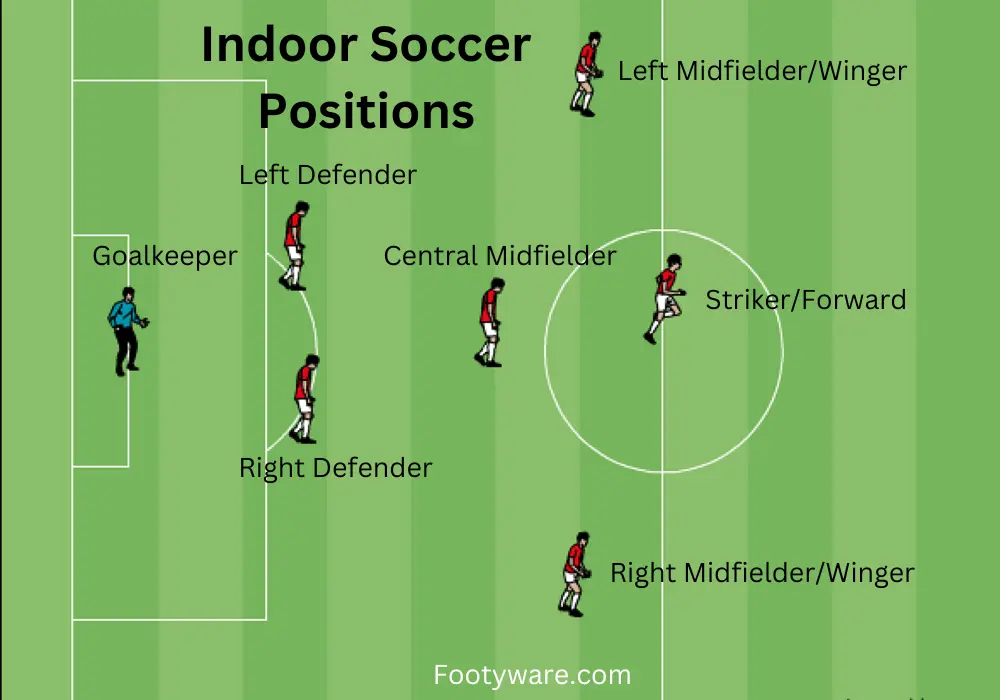
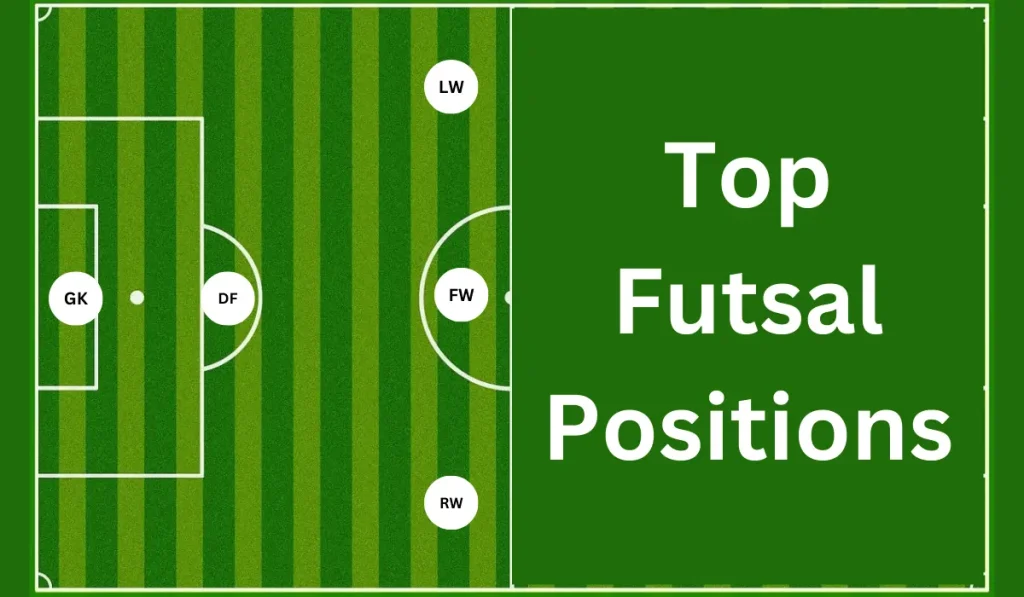
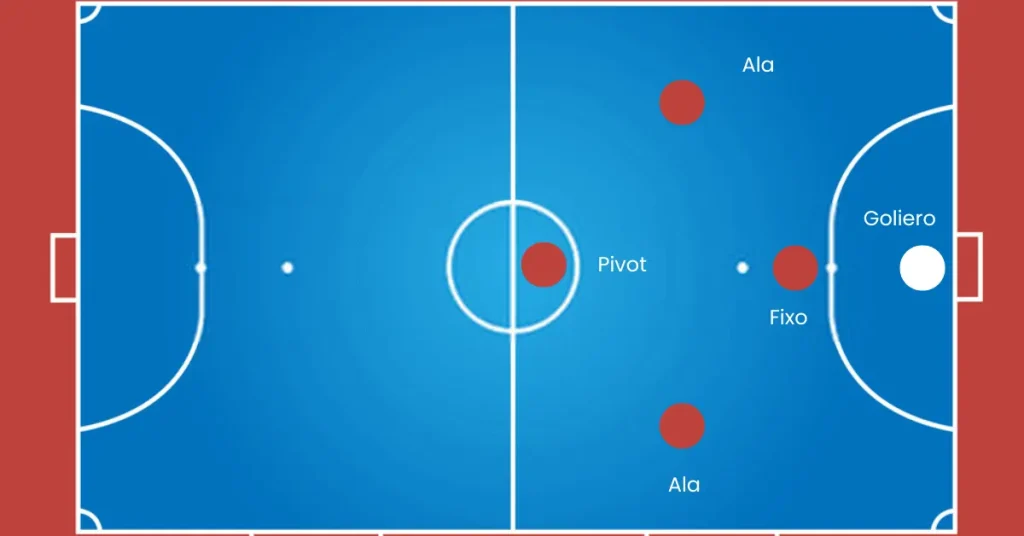
The 5 vs 5 format of futsal leads to more fluid positioning compared to the fixed roles like in 11-a-side soccer. In futsal, there are no dedicated defenders or midfielders – all outfield players must be competent at both attacking and defending.
The smaller court means players are constantly rotating to support teammates in attack and tracking back to defend. Specialist positions are rare since proximity requires all players to multitask. Futsal formations are also different from soccer formations because the number of players and space available on the pitch in both games is different.
Futsal introduces unique roles like the pivot, a central target man who receives passes with his back to goal to link up play. Soccer has no equivalent to this creative attacker.
Wide players in futsal called alas operate in tighter spaces and focus on 1v1 play, while soccer wingers stretch the field running up and down the flanks.
The futsal goalkeeper acts as a sweeper, distributing the ball with their feet and supporting the attack, as opposed to soccer keepers are focused on shot-stopping from the goal line within the D area.
The flexibility demanded by the 5v5 futsal game develops well-rounded players competent in all areas. In futsal, positions change rapidly to support teammates on a small court. Improving futsal positions your team will improve and it will also improve FIFA futsal rankings.
In contrast, 11-a-side soccer permits dedicated roles like pure strikers, defenders, and creative midfielders to flourish in specific zones.
Difference Between Futsal and Soccer Ball
The main differences between a futsal ball and a soccer ball relate to size, weight, materials, diameter, and bounce. Typically, a futsal ball size is 4 ball weighing 400-440g while a soccer ball is size 5 weighing between 410-450g.
The smaller and heavier futsal ball allows for better ball control and passing on a hard indoor court. Futsal balls have a compressed cork interior and durable synthetic leather exterior to control bounce while soccer balls have a rubber exterior to withstand outdoor grass pitches.
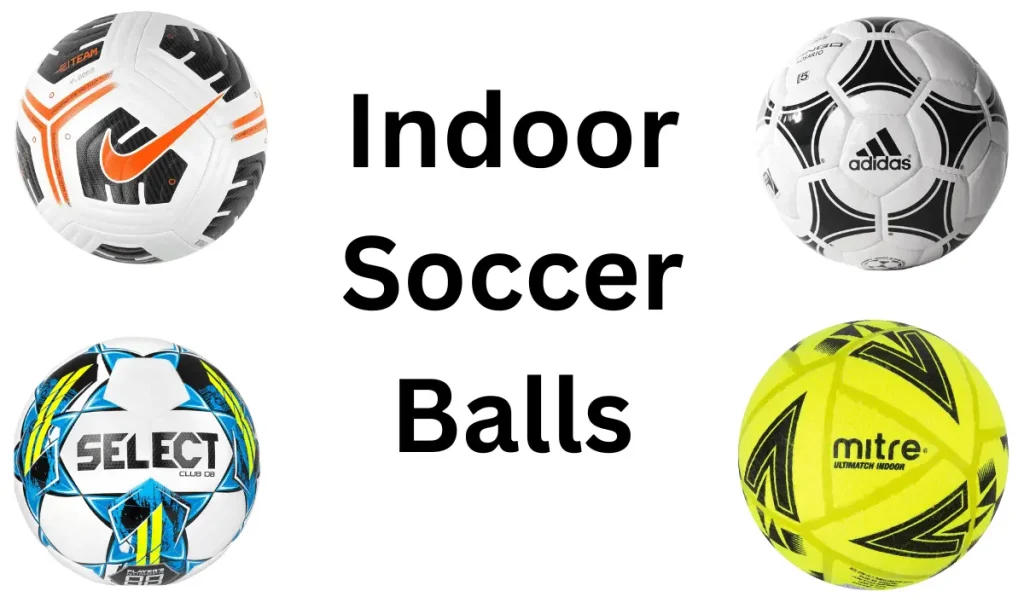
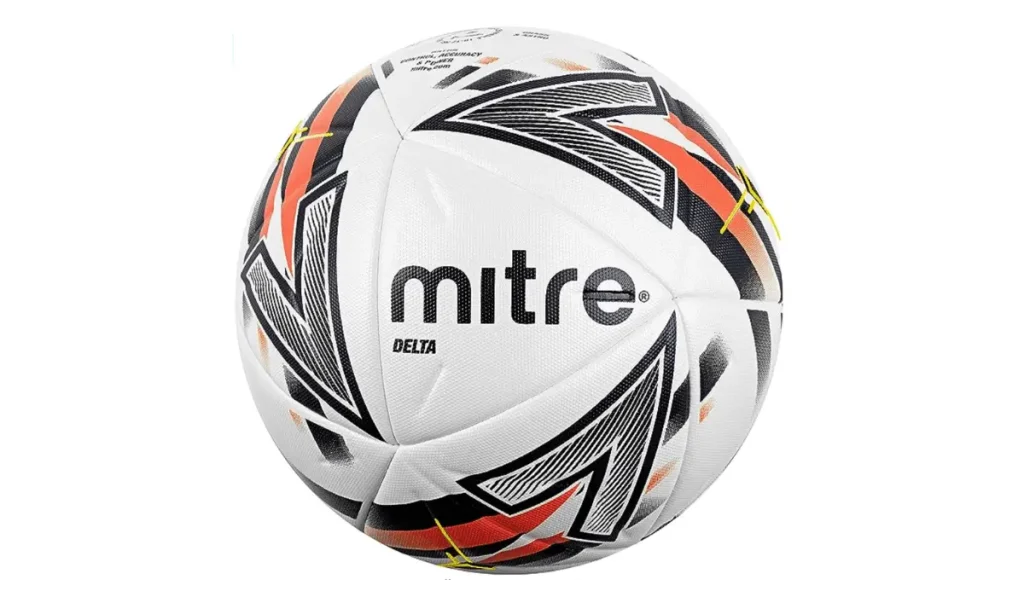
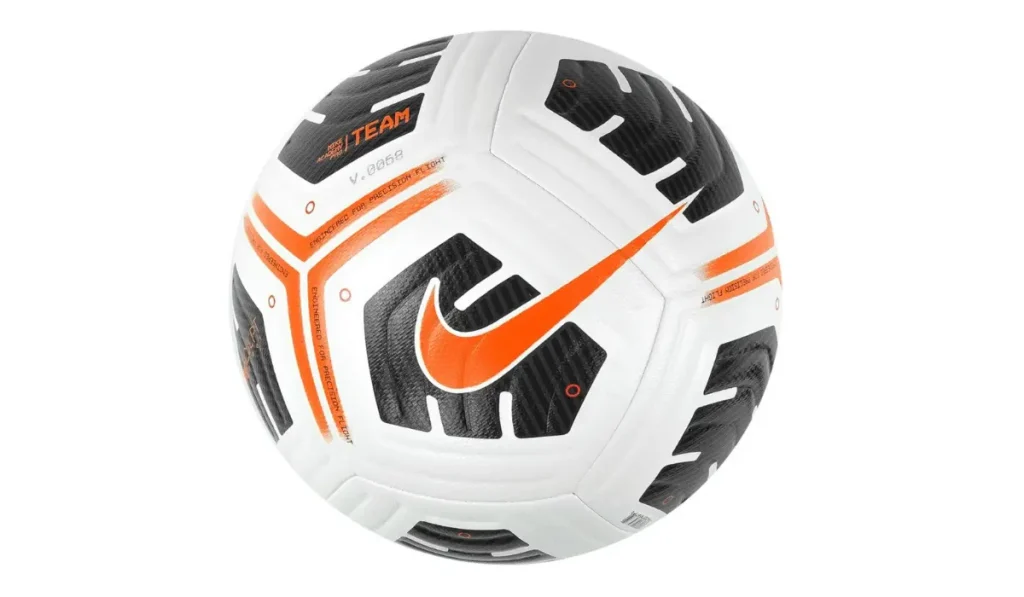
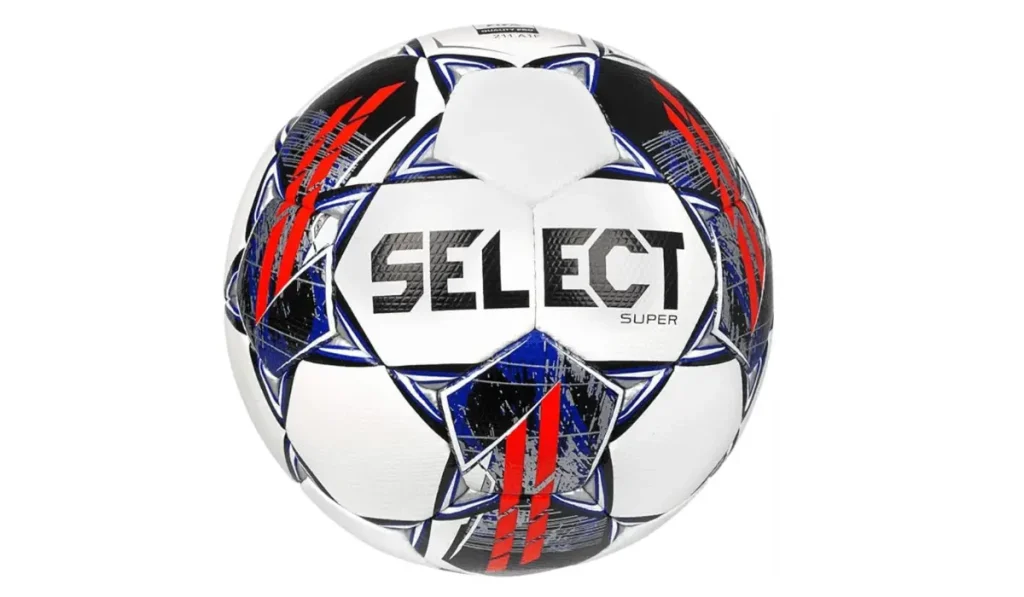
In terms of diameter, a regulation futsal ball measures between 62-64cm compared to a soccer ball which is 68-72cm. The weight of a futsal ball also leads to a much lower bounce – when dropped from 1 meter high, a futsal ball will have 50-65% rebound while a soccer ball can rebound 90-100%. Lower bounce allows for more accurate passes and shots in futsal.
Number of Players and Substitutions
Futsal has five players per team with unlimited flying substitutions. Soccer has eleven players with a limit of three substitutions. In futsal, squads contain up to twelve players who can sub on and off without stopping play. This constant rotation keeps fresh legs on the court.
Soccer originally allowed one substitution per team introduced in 1958. This increased to two subs in 1988 then three in 1995. Up to five substitutions were permitted from 2020. Subs in soccer can only be made at a break in play with the referee’s permission.
The unlimited futsal subs encourage free-flowing games with sustained intensity. Players can go all out knowing they’ll be replaced. Limited soccer subs require managers to strategize when to make changes. Players conserve energy for the full 90 minutes.
Extra subs are allowed in soccer-friendly games and youth matches in the futsal league. The normal limit prevents over-coaching during competitive games. So futsal tournament emphasizes continuous action with unlimited changes while soccer values set roles with restricted subs.
Rules Differences
Soccer is played between two teams of 11 players each. A coin toss determines which team kicks off first to start the game. The player taking the kickoff cannot touch the ball again until another player touches it.
Soccer aims to score more goals than the opposing team by getting the ball into the opponent’s net. Players can score from anywhere on the field as long as the whole ball crosses over the goal line between the goal posts and under the crossbar.
Soccer players must use their feet, head, or chest to control the ball – hands are not allowed except for the goalkeeper within their penalty area. Slide tackling, tripping, pushing, and excessive force are prohibited. Fouls result in a direct or indirect free kick for the other team. Players committing serious fouls may receive a caution (yellow card) or ejection (red card).
When the ball goes out of bounds over the sideline, the play restarts with a throw-in. When it crosses the end line, play restarts with a goal kick (if last touched by the attacking team) or corner kick (if last touched by the defending team).
The offside rule aims to prevent goal-hanging and goal-poaching. An attacking player cannot receive the ball if they are closer to the opponent’s goal line than both the ball and the second last defender when the ball is played.
A regulation soccer field is 100-130 yards long by 50-100 yards wide. Lines, penalty areas, goal areas, corner arcs, and a center circle designate specific areas of the field. Games last two 45-minute halves with a halftime break. Injury time may be added at the referee’s discretion.
Uniforms, shin guards, cleats, and other equipment must abide by strict regulations. Substitutions are limited and must occur at stoppages approved by the referee. Overall, the rules aim to ensure fair play, protect player safety, and encourage skillful play.
Playing Surface
Futsal is played indoors on a hard court surface like wood or artificial material, whereas soccer is played outdoors on grass or artificial turf. The indoor setting leads to a faster pace as the ball moves quicker across the smooth, flat surface.
The hard court surface affects how the game is played – there is more emphasis on controlled passing and ball manipulation in futsal rather than long balls and aerial play. Ground play dominates on the true bounce of the indoor court.
In summary, while the basic objective is the same, futsal differs from soccer in major ways regarding team shape, the ball, pace of play, rules, substitutions, and playing surface. The smaller and faster version of futsal brings its unique skills and strategies. Both sports offer fun challenges for players looking to master ball control and team play.
Benefits of Playing Futsal vs Soccer
Why Play Futsal?
Skill Development: ✓ Dramatically improves technical ability ✓ Develops exceptional first touch ✓ Builds confidence in tight spaces ✓ Enhances creativity and improvisation ✓ Accelerates decision-making speed
Practical Advantages: ✓ Weather-independent (always indoors) ✓ Year-round availability ✓ Less equipment needed (no cleats, shin guards optional) ✓ Smaller teams easier to organize ✓ Less physically demanding (shorter duration) ✓ Lower injury rate (softer surface, less contact)
Social Benefits: ✓ More touches per player (skill development) ✓ Constant involvement (can’t hide) ✓ Faster games (less standing around) ✓ Smaller commitment (40 vs 90 minutes)
Best For:
- Youth development (ages 8-16 especially)
- Technical skill enhancement
- Soccer players wanting to improve touch
- Small group games (easier to organize)
- Indoor/winter training
Why Play Soccer?
Athletic Development: ✓ Builds cardiovascular endurance ✓ Develops physical strength ✓ Improves stamina over longer duration ✓ Enhances tactical understanding ✓ Teaches positional discipline
Strategic Elements: ✓ Complex tactical systems ✓ Set piece execution ✓ Team shape and organization ✓ Varied playing styles possible ✓ Long-term strategic planning
Cultural/Social Benefits: ✓ World’s most popular sport ✓ More professional opportunities ✓ International recognition ✓ Larger community worldwide ✓ More media coverage and support
Best For:
- Building endurance and fitness
- Tactical and strategic thinkers
- Those seeking professional pathway
- Team-oriented players
- Traditional sports environments
Which Should You Play: Futsal or Soccer?
For Youth Development (Ages 6-16)
Recommendation: Start with Futsal, Add Soccer
Reasons:
- Futsal develops superior technical skills
- More touches per player accelerates learning
- Smaller spaces force better control
- Quick decisions improve soccer IQ
- Less physically demanding for younger bodies
- Year-round availability
Progression:
- Ages 6-10: Primarily futsal (70-80% of training)
- Ages 11-14: Balance futsal and soccer (50-50)
- Ages 15+: Transition to primary soccer with futsal cross-training
For Adult Recreational Players
Recommendation: Based on Goals
Choose Futsal If:
- Want technical skill challenge
- Prefer faster-paced games
- Have limited time (40 vs 90 min)
- Play year-round indoors
- Smaller friend groups
- Less physically demanding
Choose Soccer If:
- Enjoy strategic, tactical play
- Want endurance workout
- Prefer outdoor activity
- Larger friend groups available
- Traditional sports preference
- More competitive leagues available
Ideal: Play Both Many adult players do futsal in winter (indoors) and soccer in summer (outdoors).
For Competitive/Professional Aspirations
Recommendation: Soccer Primary, Futsal Cross-Training
Professional Pathway:
- Soccer has larger professional infrastructure
- More professional leagues worldwide
- Higher salaries and opportunities
- Greater media exposure
- Olympic sport with more history
However:
- Continue futsal training for skill maintenance
- Many pro soccer academies incorporate futsal
- Professional futsal leagues exist (less common)
- Skills transfer excellently between sports
Conclusion: Two Sports, Complementary Benefits
Futsal and soccer, while sharing the same beautiful game DNA, offer distinct experiences that develop different but complementary skills. Understanding their differences helps players, coaches, and parents make informed decisions about which sport to pursue—or ideally, how to benefit from both.
Key Takeaways:
✓ Futsal (5v5, hard court, Size 4 ball) emphasizes technical skill, creativity, and quick decisions ✓ Soccer (11v11, grass field, Size 5 ball) emphasizes tactics, endurance, and teamwork ✓ No offsides in futsal creates constant attacking opportunities ✓ Unlimited futsal subs maintain intensity; limited soccer subs require energy management ✓ Stop clock in futsal ensures fair playing time; running clock in soccer adds strategic element ✓ Futsal’s low-bounce ball forces superior technical control ✓ Playing both sports creates most complete player development
The Ideal Approach: Use futsal as a technical development tool, especially for youth players, while pursuing soccer for its tactical depth, professional opportunities, and global community. The skills learned in futsal’s tight spaces and fast pace transfer beautifully to soccer’s larger stage, creating players with exceptional touch, vision, and creativity.
Whether you choose the compact intensity of the futsal court or the expansive tactics of the soccer pitch—or embrace both—you’re engaging with variants of the world’s most beautiful game. Lace up your futsal shoes or cleats, grab a ball, and experience the unique joys each sport offers.