
What is the Size of a Futsal Ball? Complete Guide
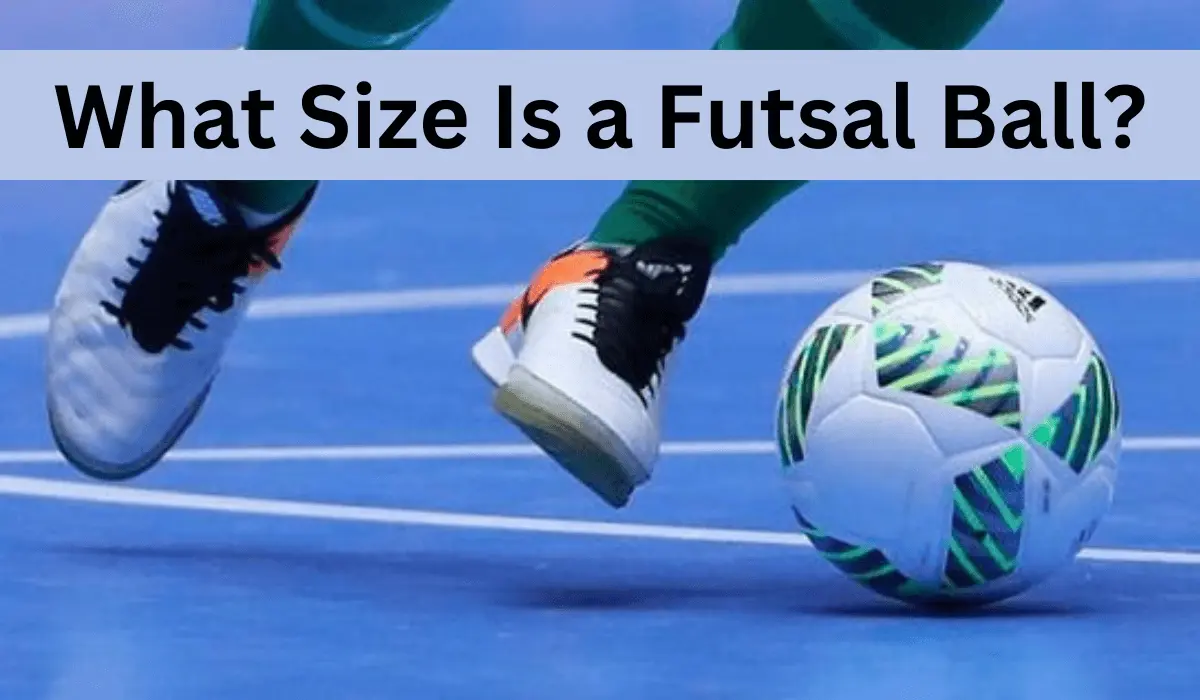
Quick Answer: A standard futsal ball (Size 4) measures 62-64 cm in circumference and weighs 400-440 grams. It’s smaller and heavier than a regular soccer ball (Size 5: 68-70 cm, 410-450g) with a dramatically reduced bounce (50-65 cm vs. 100-150 cm). This unique design forces better ball control and enhances skill development on hard indoor courts.
Understanding Futsal Ball Sizes
Futsal balls come in three standardized sizes designed for different age groups and skill levels. Selecting the correct size ensures proper development, safety, and optimal gameplay experience.
Official Futsal Ball Size Chart
| Futsal Ball Size | Circumference | Weight | Bounce | Age |
|---|---|---|---|---|
| Size 2 (Mini) | 50-55 cm | 280-320 g | 40-50 cm | Under 8 years |
| Size 3 (Junior) | 59-61 cm | 350-380 g | 55-65 cm | 8-12 years |
| Size 4 (Standard) | 62-64 cm | 400-440 g | 50-65 cm | 12+ years |
*Bounce height from 2-meter drop test
Size 4: The Standard Futsal Ball
Official Specifications (FIFA-Approved):
- Circumference: 62-64 cm (24.4-25.2 inches)
- Weight: 400-440 grams (14.1-15.5 oz)
- Bounce: 50-65 cm when dropped from 2 meters
- Pressure: 55-62 kPa (8-9 psi)
- Diameter: Approximately 20 cm (7.9 inches)
Who Uses Size 4: ✓ Players aged 12 and older ✓ All professional futsal leagues worldwide ✓ FIFA Futsal World Cup ✓ UEFA Futsal Championship ✓ Adult recreational futsal ✓ High school and college futsal
Why This Size: The Size 4 ball is specifically engineered for futsal’s hard court surfaces and fast-paced gameplay. Its reduced size compared to outdoor soccer allows for superior close control in tight spaces, while the heavier weight and low bounce create the characteristic futsal playing style.
Size 3: Junior Futsal Ball
Specifications:
- Circumference: 59-61 cm (23.2-24 inches)
- Weight: 350-380 grams (12.3-13.4 oz)
- Bounce: 55-65 cm from 2-meter drop
- Pressure: 45-60 kPa (6.5-9 psi)
Who Uses Size 3: ✓ Youth players aged 8-12 years ✓ Elementary and middle school programs ✓ Youth futsal leagues (U8-U12) ✓ Beginning skill development programs
Why This Size: The lighter Size 3 ball helps young players develop proper technique without the physical demands of a full-size ball. It’s easier to control, kick, and maneuver, building confidence and fundamental skills during critical developmental years.
Developmental Benefits:
- Easier to lift for developing leg strength
- Proportional to smaller feet and bodies
- Builds confidence with successful touches
- Encourages proper technique over power
- Reduces injury risk for young players
Size 2: Mini Futsal Ball
Specifications:
- Circumference: 50-55 cm (19.7-21.7 inches)
- Weight: 280-320 grams (9.9-11.3 oz)
- Bounce: 40-50 cm from 2-meter drop
- Pressure: 40-55 kPa (6-8 psi)
Who Uses Size 2: ✓ Children under 8 years old ✓ Introductory programs ✓ Preschool and early elementary ✓ First-time futsal players
Why This Size: The mini ball introduces very young children to futsal fundamentals. Its lightweight construction and small size match their physical capabilities, making the sport accessible and enjoyable for the youngest players.
Early Development Focus:
- Coordination and balance
- Basic striking technique
- Spatial awareness
- Fun and engagement
- Building love for the game
With the correctly sized and weighted futsal ball plus appropriate non-marking shoes, players can experience futsal as the optimally paced, technical, and intensely fun indoor version of the beautiful game.
Futsal accelerates the development of fundamental ball skills, creativity, close control, and quick reactions that directly translate to elevated success on the outdoor soccer pitch.
The size of the futsal ball is one of the key differences that sets it apart from a traditional outdoor soccer ball.
Official Futsal Ball Sizes
Futsal balls are smaller and heavier than standard soccer balls to improve control on hard court surfaces. There are 3 official ball sizes approved for competitive futsal. Size 2 mini futsal balls have a circumference of 50-55 cm and weigh 280-320 grams.
These very lightweight balls are meant for beginning players under age 8. Size 3 junior futsal balls have a circumference of 59-61 cm and weigh 350-380 grams. They have a bounce of 55-65 cm. Size 3 balls are used for U8 to U12 age groups to improve touch and feel for developing players.
The standard size 4 futsal ball has a circumference of 62-64 cm and a weight of 400-440 grams. It has a reduced bounce of 50-65 cm compared to outdoor soccer balls. This heavier ball with a low bounce forces players to keep it closer to the ground and constantly adjusts touches.
Size 4 is approved for competitive play at age 12 and up through the professional level. The official standard size, weight, and bounce of Size 4 futsal balls accentuate the fast pace of the game with quick exchanges of the ball on the hard indoor court.
Futsal balls are designed for indoor conditions. Mini Size 2 balls help beginners under 8 get used to striking the ball. Size 3 junior balls improve touch for U8 to U12 players. Size 4 is the official standard size approved for competitive futsal from age 12 on up.
The reduced weight and bounce compared to soccer balls contribute to the speed of play, close control, and constant adjustments required by the indoor game. Futsal balls allow official indoor futsal leagues and matches to maintain consistent and fair play.
Futsal Ball vs Soccer Ball: Key Differences
Understanding how futsal balls differ from soccer balls explains why futsal plays so differently.
| Futsal Ball vs. Soccer Ball Size Details | |
|---|---|
| Circumference | Futsal ball sizes range from 50-64 cm in circumference – Soccer balls are bigger at: – Size 3: 68-69 cm – Size 4: 63-66 cm – Size 5: 68-70 cm |
| Futsal balls are 4 to 6 cm smaller in diameter than their soccer equivalents. | |
| Weight | Futsal balls weigh 350-440 g – Soccer balls weigh from 370-450 g |
| Futsal balls are slightly heavier than soccer balls when comparing equivalent sizes. | |
| Bounce | Futsal balls bounce 40-65 cm from a 2m drop – Soccer balls bounce 100-150 cm from the same height |
| The futsal ball bounces much lower due to its specialized design. | |
Key Insight: A futsal ball (Size 4) is smaller than a soccer Size 5 but heavier than a soccer Size 4. This unique combination creates futsal’s distinctive playing characteristics.
Bounce: The Critical Difference
Bounce Test (Drop from 2 meters):
Futsal Ball:
- Bounces: 50-65 cm (20-26 inches)
- 60-70% less bounce than soccer ball
- Stays low to ground
- Minimal unpredictable movement
Soccer Ball:
- Bounces: 100-150 cm (39-59 inches)
- High, lively bounce
- More aerial play
- Greater unpredictability
Why the Difference Matters:
The dramatically reduced bounce of futsal balls fundamentally changes gameplay:
✓ Forces ground-based play – Ball doesn’t bounce away, stays at feet ✓ Rewards first touch – Must control immediately, can’t wait for bounce ✓ Increases possession changes – Loose balls stay accessible ✓ Demands precision – Less forgiving of poor touches ✓ Enhances skill development – Constant ball contact improves technique
Weight and Feel
Futsal Ball (400-440g):
- Feels heavier in your hands
- Requires more force to kick long distances
- “Sticks” to feet during dribbling
- Less affected by spin
- More predictable trajectory
Soccer Ball (410-450g):
- Lighter relative to size
- Travels farther with less effort
- More responsive to spin
- Affected more by wind (outdoor)
- Different flight characteristics
Playing Impact: The heavier futsal ball relative to its size creates a more controlled game focused on close-quarters passing rather than long-range kicks.
Construction Differences
Why Futsal Balls Bounce Less:
Soccer Ball Interior:
- Rubber or latex bladder
- Thin internal lining
- Air pressure creates bounce
- Simple construction
Futsal Ball Interior:
- Rubber or latex bladder
- Additional foam, textile, or cotton padding layer
- Padding absorbs impact energy
- Reduces bounce dramatically
- More complex construction
The Secret: That extra padding layer between the bladder and outer casing is what makes a futsal ball unique. It dampens the bounce while maintaining durability and shape.
Why Does the Futsal Ball Bounce Less?
The reason futsal balls have a dramatically lower bounce comes down to the internal construction:
Inside a soccer ball, you find just the air bladder and inner lining. More air pressure gives it more bounce.
Inside a futsal ball, there is an extra layer of foam, textile, or cotton padding between the lining and bladder. This padding reduces the overall bounce to give better ball control.
The precise materials and thickness of padding can fine-tune the ball’s bounce, weight, and flight characteristics. Top futsal brands carefully engineer the interior to meet exact specifications for responsiveness and touch on the court.
| How Futsal Ball Improves Skills |
|---|
| Quicker reactions The faster game speed in tight spaces improves reflexes and mobility. |
| Softer first touch The low bounce encourages controlling the ball in one motion rather than letting it bounce first. |
| Shielding and protecting the ball The heavier ball requires shielding from opponents in tight spaces. |
| Precise passing and shooting The ball punishes mishit shots and loose passes quickly. Players learn accuracy. |
| Creativity in close quarters Less space and time on the ball rewards skill, invention, and fast combination play. |
Why Futsal Ball Design Improves Soccer Skills
The unique characteristics of futsal balls make them exceptional training tools that translate directly to outdoor soccer excellence.
Skill Development Benefits
1. Superior First Touch
How It Helps:
- Low bounce demands immediate control
- Can’t let ball bounce before touching
- Develops “soft feet” naturally
- Improves cushioning technique
Soccer Translation: Players develop exceptional first touch control that makes outdoor soccer balls feel easy to manage.
2. Faster Decision-Making
How It Helps:
- Ball stays close, requiring constant awareness
- Less time between touches
- Opponents closer in tight spaces
- Must think and react faster
Soccer Translation: Quicker processing speed under pressure translates to better performance in crowded midfield areas.
3. Enhanced Close Control
How It Helps:
- Heavier ball requires better technique to manipulate
- Small touches more effective than big ones
- Rewards technical skill over power
- Improves dribbling in tight spaces
Soccer Translation: Players become more comfortable in 1v1 situations and can navigate pressure better.
4. Precise Passing Accuracy
How It Helps:
- Low bounce punishes inaccurate passes
- Receivers must control difficult balls
- Encourages weighted, accurate distribution
- Rewards technical passing over power
Soccer Translation: Passing accuracy and vision improve significantly, leading to better possession soccer.
5. Creative Problem-Solving
How It Helps:
- Limited space forces creative solutions
- Can’t rely on long balls over defense
- Must use skill moves and combinations
- Encourages flair and innovation
Soccer Translation: Players develop the creativity and confidence to try skills in game situations.
6. Better Shooting Technique
How It Helps:
- Smaller ball requires precise striking
- Heavier weight demands proper form
- Low bounce means fewer lucky bounces
- Accuracy prioritized over power
Soccer Translation: Improved shooting technique and placement carry over to outdoor soccer.
Professional Player Testimonials
Why Legends Credit Futsal:
Many of the world’s greatest soccer players attribute their skills to futsal:
- Pelé – Developed close control and creativity
- Ronaldinho – Mastered tricks and ball manipulation
- Lionel Messi – Learned quick turns and dribbling
- Cristiano Ronaldo – Improved footwork and technique
- Neymar – Developed flair and 1v1 ability
- Andrés Iniesta – Perfected close control and vision
The futsal ball’s unique properties accelerated their development in ways outdoor soccer alone couldn’t achieve.
How to Choose the Right Futsal Ball Size
Selecting the appropriate ball size ensures safety, proper development, and maximum enjoyment.
| Recommended Futsal Ball Size by Age |
|---|
| Under age 8 – Mini size 2 futsal ball |
| Age 8-12 – Junior size 3 futsal ball |
| Age 12 and up – Standard size 4 futsal ball |
| Adult match ball – Size 4, official match ball approved by organizing body |
By Age Group (Recommended)
Under 8 Years Old:
- Use: Size 2 (Mini)
- Why: Matches physical capabilities
- Focus: Fun, basic coordination, love of game
- Alternative: Can use Size 3 if Size 2 unavailable
Ages 8-12:
- Use: Size 3 (Junior)
- Why: Supports technical development
- Focus: Skill building, proper technique, confidence
- Transition: Move to Size 4 around age 11-12 based on development
Ages 12+ and Adults:
- Use: Size 4 (Standard)
- Why: Official competition size
- Focus: Full futsal experience, competitive play
- Note: This is the only size for organized adult play
By Skill Level
Beginners (Any Age):
- Consider starting one size smaller than age recommendation
- Builds confidence with more manageable ball
- Easier to experience success early
- Graduate to proper size once comfortable
Intermediate Players:
- Always use age-appropriate size
- Challenges skills appropriately
- Prepares for competitive play
- Develops at optimal pace
Advanced/Competitive Players:
- Must use official Size 4 for ages 12+
- Matches competition conditions
- No exceptions for serious play
- Trains with game-realistic equipment
For Mixed-Age Casual Play
General Rule: Use the size appropriate for the youngest player in the group.
Why:
- Keeps game fair and enjoyable for all
- Prevents younger players from being overwhelmed
- Older players can still develop skills
- Inclusive environment
Example: If playing with ages 9, 11, and 14, use Size 3 (for the 9-year-old).
For Training and Practice
Skill Development:
- Use age-appropriate size
- Occasionally practice with one size larger for challenge
- Build strength and technique progressively
Position-Specific Training:
- Field players: Stick to age-appropriate sizes
- Goalkeepers: Consider Size 4 even for younger ages (U12+) to match game conditions
Futsal Ball Pressure and Inflation
Proper inflation is critical for performance, safety, and ball longevity.
Recommended Pressure by Size
| Recommended Futsal Ball Pressure by Size |
|---|
| Size 2: 40-55 kPa (6-8 psi) |
| Size 3: 45-60 kPa (6.5-9 psi) |
| Size 4: 55-62 kPa (8-9 psi) |
Effects of Improper Inflation
Under-Inflated (Too Soft): ❌ Inconsistent bounce (even more unpredictable) ❌ Poor ball flight and trajectory ❌ Sluggish response off feet ❌ Difficult to pass accurately ❌ Can damage bladder over time ❌ Feels “dead” during play
Properly Inflated: ✓ Consistent, predictable bounce ✓ Optimal weight and feel ✓ Responsive to touches ✓ Accurate passing and shooting ✓ Safe for all players ✓ Maximum durability
Over-Inflated (Too Hard): ❌ Extremely difficult to control ❌ Bounces too high (defeats futsal ball purpose) ❌ Painful to kick or head ❌ Injury risk (foot, ankle, head) ❌ Can burst or damage seams ❌ Uncomfortable for players
How to Check and Adjust Pressure
Equipment Needed:
- Ball pump with pressure gauge
- Inflation needle
- Optional: Digital pressure gauge for precision
Checking Pressure:
- Squeeze test (rough estimate): Should give slightly but feel firm
- Bounce test: Drop from 2m, should bounce 50-65cm for Size 4
- Gauge reading: Insert needle, check pressure on gauge
Adjusting Pressure:
- To increase: Pump air in slowly, checking frequently
- To decrease: Press valve pin gently to release air
- Target: Middle of recommended range for most reliable performance
Maintenance Schedule:
- Check pressure before each use (serious play)
- Check weekly for recreational use
- Balls naturally lose pressure over time
- Temperature changes affect pressure (cold = lower, heat = higher)
Indoor vs Outdoor Futsal Balls
While both follow the same size and weight specifications, construction differs based on intended playing surface.
Indoor Futsal Balls
Surface Types:
- Hardwood gymnasium floors
- Polished concrete
- Sport court tiles
- Smooth indoor surfaces
Construction Features:
- Durable outer casing: Resists abrasion from hard courts
- Non-marking material: Won’t scuff or mark floors
- Harder surface: Provides consistent performance
- Optimized for control: Smooth, predictable touch
Material:
- Synthetic leather
- PU (polyurethane)
- Textured polymer
- Sometimes genuine leather (premium)
Best For: ✓ Gymnasium play ✓ Indoor futsal courts ✓ Competition matches ✓ Hard surface training
Outdoor Futsal Balls
Surface Types:
- Tennis courts
- Outdoor sport courts
- Rough concrete
- Artificial grass (some)
Construction Features:
- Softer, grippier outer casing: Better touch on rough surfaces
- Textured or fuzzy surface: Enhanced grip and control
- More cushioning: Absorbs impact from harder outdoor courts
- Weather-resistant: Handles varied conditions
Material:
- Felt or fuzzy synthetic
- Softer compounds
- High-grip textures
- UV-resistant materials
Trade-offs: ✓ Better first touch outdoors ✗ Wears faster on abrasive surfaces ✗ May mark some indoor floors ✗ Can become waterlogged
Which Should You Buy?
Choose Indoor Futsal Ball If:
- Playing primarily in gyms or indoor facilities
- Participating in organized leagues
- Want maximum durability
- Need non-marking for facility rules
Choose Outdoor Futsal Ball If:
- Playing on outdoor courts frequently
- Want best possible touch/feel
- Playing casually, not competitively
- Don’t mind faster wear
Best Solution for Frequent Players: Own both types and use appropriate ball for each surface. This maximizes performance and extends ball life.
Futsal Ball Materials and Construction
Understanding construction helps you choose quality balls and appreciate performance differences.
| Futsal Ball Construction |
|---|
| Outer Casing – Made of leather, synthetic leather, or textured polymer. Provides shape, softness of touch, and protection from scrapes. |
| Inner Lining – Thin durable material to seal air inside and hold ball shape. Usually synthetic leather or durable woven fabric. |
| Bladder – Air-filled rubber or latex bladder at the core inflates to give the ball shape and bounce. May have interior foam or fabric padding. |
Three-Layer Construction
1. Outer Casing (Cover)
Purpose: Protection, feel, grip, aesthetics
Materials:
- Genuine leather: Premium feel, excellent touch, expensive, requires maintenance
- Synthetic leather (PU): Durable, consistent, affordable, most common
- Textured polymer: Very durable, good for outdoor, less premium feel
- Microfiber: Modern option, combines durability with good touch
Construction Methods:
- Hand-stitched: Premium, excellent feel, used in professional balls
- Machine-stitched: Standard quality, good durability
- Thermally bonded (molded): Most durable, consistent, harder feel
Panels: Typically 32 panels (like soccer balls) arranged in geometric pattern
2. Inner Lining
Purpose: Seal air, maintain shape, add structure
Materials:
- Synthetic leather layers
- Durable woven fabric
- Cotton or polyester fabric
- Multiple layers (2-4 typically)
Function:
- Provides structure to outer casing
- Helps ball maintain round shape
- Adds durability
- Contributes to overall feel
3. Bladder and Padding
Bladder Materials:
- Butyl rubber: Best air retention, stays inflated longer, heavier
- Latex: Softer feel, better responsiveness, loses air faster, lighter
The Futsal Secret – Internal Padding:
- Foam layer: Most common, lightweight, effective bounce reduction
- Textile/cotton padding: Traditional, reliable, durable
- Specialized compounds: Modern balls use proprietary materials
Purpose of Padding:
- Reduces bounce (the key futsal characteristic)
- Absorbs impact energy
- Creates characteristic “heavy” feel
- Improves control on hard surfaces
Quality Indicators
Premium Futsal Balls ($50-100+):
- Hand-stitched construction
- Genuine or high-quality synthetic leather
- Advanced bladder materials (butyl)
- Precisely engineered padding
- FIFA-approved specifications
- Professional brand reputation
Mid-Range Balls ($25-50):
- Machine-stitched or thermal bonding
- Quality synthetic materials
- Standard bladder construction
- Reliable performance
- Good durability
- Best value for most players
Budget Balls ($10-25):
- Good for beginners or practice
- Basic machine stitching or molding
- Lower-grade synthetic
- Standard bladder
- Adequate for casual play
- Shorter lifespan
Top Futsal Ball Brands (2025)
Choosing reputable brands ensures quality, performance, and durability.
| Top Futsal Ball Brands |
|---|
| Mitre – The official futsal ball of US Youth Futsal, Mitre designs quality balls for all levels. |
| Select – The leader in hand-stitched match balls, endorsed by pro leagues worldwide. |
| Mikasa – Produces the official futsal ball used in FIFA and UEFA competitions. |
| Kipsta – Affordable futsal balls with excellent reviews from Decathlon’s in-house brand. |
| Adidas – A trusted option for pro-quality futsal balls and gear. |
Professional-Grade Brands
1. Select Futsal
Reputation: Industry leader in hand-stitched match balls Notable Products:
- Select Futsal Master – Premium match ball
- Select Futsal Super – Professional quality
- Select Futsal Mimas – Training ball
Strengths: ✓ Endorsed by professional leagues worldwide ✓ Exceptional hand-stitched construction ✓ Superior touch and feel ✓ Used in UEFA competitions
Price Range: $40-120
2. Mikasa
Reputation: Official ball supplier for FIFA and UEFA Notable Products:
- Mikasa FSC62 – FIFA/UEFA official ball
- Mikasa FLL500 – Competition ball
- Mikasa FLL400 – Training ball
Strengths: ✓ Used in FIFA Futsal World Cup ✓ UEFA Futsal Championship official ball ✓ Highest level of competition validation ✓ Excellent quality control
Price Range: $35-100
3. Adidas Futsal
Reputation: Global soccer brand with futsal expertise Notable Products:
- Adidas Uniforia Futsal – Tournament ball
- Adidas Futsal Sala – Training ball
- Adidas Team Sala – Budget option
Strengths: ✓ Trusted global brand ✓ Wide availability ✓ Modern design aesthetics ✓ Good range of price points
Price Range: $25-80
4. Mitre Futsal
Reputation: Official ball of US Youth Futsal Notable Products:
- Mitre Futsal Mundo – Competition ball
- Mitre Futsal Tempest – All-purpose ball
- Mitre Ultimatch Futsal – Match ball
Strengths: ✓ Strong presence in North America ✓ Youth-focused designs ✓ Good quality-to-price ratio ✓ Wide range of options
Price Range: $20-70
5. Kipsta (Decathlon)
Reputation: Excellent value in-house brand Notable Products:
- Kipsta FS500 – Competition ball
- Kipsta FS100 – Beginner ball
- Kipsta Ginga – Street futsal
Strengths: ✓ Outstanding value for money ✓ Good quality at lower prices ✓ Available at Decathlon stores ✓ Positive user reviews
Price Range: $15-40
Other Quality Brands
- Joma: Popular in Spain, good value
- Kelme: Futsal specialists, professional quality
- Umbro: Classic brand, reliable options
- Penalty: Brazilian brand, authentic futsal heritage
- Derbystar: German quality, excellent durability
Buying Recommendations
For Competition/Serious Play:
- Mikasa FSC62 (if budget allows)
- Select Futsal Master
- Adidas tournament balls
- Must be FIFA-approved for official matches
For Regular Practice:
- Mitre Futsal Mundo
- Kipsta FS500
- Select Futsal Super
- Mid-range balls from top brands
For Beginners/Casual Play:
- Kipsta FS100
- Adidas Team Sala
- Mitre entry-level balls
- Any reputable brand’s training ball
For Youth Players:
- Focus on quality over brand name
- Size-appropriate balls from Mitre
- Kipsta junior options
- Adidas youth futsal balls
Futsal Ball Care and Maintenance
Proper maintenance extends ball life and maintains performance.
After Each Use (5 minutes)
Immediate Care:
- Wipe down with dry or slightly damp cloth
- Remove dirt and dust (abrades surface over time)
- Check for damage (cuts, punctures, seam separation)
- Release slight pressure if storing long-term (reduces bladder stress)
- Store in cool, dry place away from direct sunlight
What NOT to Do: ❌ Leave in hot car (heat damages materials) ❌ Store while wet (promotes mold, material degradation) ❌ Leave fully inflated for months unused ❌ Sit or step on ball
| Care and Maintenance of Futsal Ball |
|---|
| Inflate fully before each use and check pressure weekly. Underinflation damages the bladder. |
| Use a ball bag to protect the ball when not playing. |
| Wipe down after use to remove dust and dirt that can abrade the surface. |
| Avoid excess water exposure which reduces grip and pressures the seams. |
| Store at room temperature away from direct sunlight and heat to prevent premature cracking. |
| Replace when lacking bounce, won’t hold air, or becomes visibly damaged. |
Weekly Maintenance
Regular Tasks:
- Check inflation pressure with gauge
- Clean thoroughly with mild soap and water
- Inspect seams for separation or wear
- Check valve for leaks
- Rotate between balls if you have multiple
Cleaning Method:
- Mix mild soap with warm water
- Use soft cloth or sponge (not abrasive)
- Wipe entire surface gently
- Rinse with clean water
- Dry completely with towel
- Air dry fully before storing
Long-Term Storage
Best Practices: ✓ Store at room temperature (60-75°F / 15-24°C) ✓ Keep away from direct sunlight and heat sources ✓ Avoid damp or humid environments ✓ Store in ball bag or box for protection ✓ Slightly deflate for extended storage (80% pressure) ✓ Keep away from sharp objects ✓ Don’t stack heavy items on top
Off-Season Storage:
- Clean thoroughly
- Deflate to about 70-80% recommended pressure
- Store in breathable bag (not sealed plastic)
- Check every few months
- Re-inflate before next use
Extending Ball Life
Tips for Maximum Durability:
- Use appropriate ball for surface (indoor/outdoor)
- Maintain proper inflation always
- Clean regularly to prevent material breakdown
- Rotate between multiple balls (if possible)
- Avoid excessive water exposure
- Don’t over-inflate (stresses seams)
- Use ball bag for transport and storage
- Avoid concrete when possible (very abrasive)
Expected Lifespan:
- Premium balls: 1-2 years with regular use
- Mid-range balls: 6-12 months with regular use
- Budget balls: 3-6 months with regular use
“Regular use” defined: 2-3 times per week
When to Replace Your Futsal Ball
Definite Replacement Signs: ❌ Won’t hold air pressure (leaking bladder) ❌ Visible punctures or cuts in outer casing ❌ Seams separating or coming apart ❌ Lost its bounce entirely (padding compressed) ❌ Deformed shape (no longer round) ❌ Surface severely worn or smooth
Consider Replacement: ⚠️ Bounce height noticeably decreased ⚠️ Requires frequent re-inflation ⚠️ Surface grip degraded significantly ⚠️ Performance feels inconsistent ⚠️ Visible wear affecting play
Don’t Wait: Using degraded balls can develop bad habits and increase injury risk from unpredictable bounces.
Conclusion: Choosing the Perfect Futsal Ball
The futsal ball’s unique design—smaller, heavier, and with dramatically reduced bounce—is central to what makes futsal an exceptional skill-development sport and thrilling game in its own right.
Key Takeaways:
✓ Size 4 (62-64cm, 400-440g) is the standard for ages 12+ and all competitive play ✓ Size 3 for youth ages 8-12, Size 2 for children under 8 ✓ Dramatically lower bounce (50-65cm vs 100-150cm) creates ground-based gameplay ✓ Internal foam padding is the secret to futsal ball’s unique characteristics ✓ Choose quality brands (Mikasa, Select, Adidas, Mitre, Kipsta) for best performance ✓ Match ball to surface (indoor vs outdoor construction) ✓ Maintain proper inflation (55-62 kPa for Size 4) for optimal performance ✓ Regular maintenance extends ball life and preserves performance
Whether you’re a beginner discovering futsal or a competitive player honing your skills, selecting the right futsal ball size and quality makes a significant difference. The ball’s specialized design isn’t just a technicality—it’s the foundation of futsal’s unique ability to develop world-class soccer skills through fast-paced, technical, and intensely enjoyable gameplay.
Invest in a quality futsal ball appropriate for your age and skill level, maintain it properly, and experience why legends like Pelé, Ronaldinho, Messi, and Neymar credit futsal as essential to their development. The right futsal ball isn’t just equipment—it’s your tool for soccer excellence.