Best Soccer Shoes for Flat Feet: Complete Guide
Quick Answer: The best soccer shoes for flat feet feature enhanced arch support, stability technology, cushioned midsoles, and roomy toe boxes. Top picks include Adidas Samba (classic support), Nike Tiempo Legend (comfort and structure), New Balance Furon/Tekela (built-in stability), and Mizuno Morelia (natural support). Always add custom orthotics or aftermarket insoles for optimal flat-foot support.
Understanding Flat Feet and Soccer Performance
Flat feet (pes planus) occur when the arch of the foot collapses, causing the entire sole to contact the ground. Approximately 20-30% of the population has flat feet, making it one of the most common foot conditions affecting soccer players.
What Are Flat Feet?
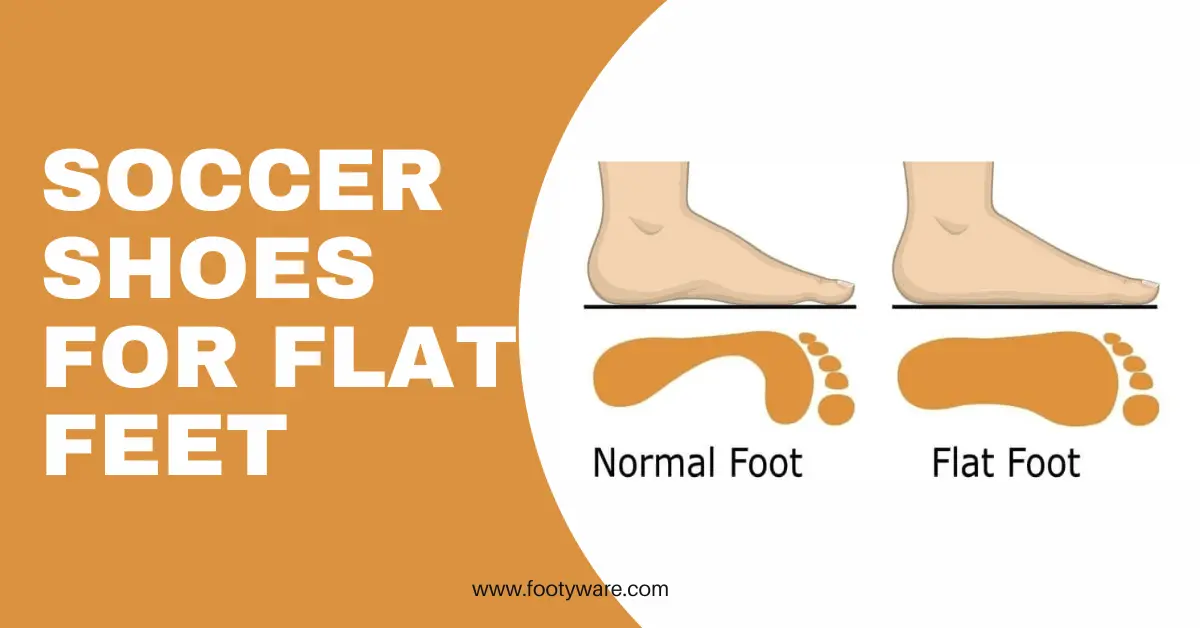
Definition: Flat feet are characterized by little to no arch in the midfoot area. When standing, the entire foot sole touches the ground, including the instep region.
How to Check if You Have Flat Feet:
Method 1: The Wet Foot Test
- Wet the bottom of your foot
- Step on a piece of paper or cardboard
- Examine your footprint
Results:
- Normal arch: Clear curve on inner foot, narrow middle section
- Low arch: Wider middle section, less pronounced curve
- Flat feet: Entire foot visible, little to no curve, wide footprint
Method 2: Visual Inspection
- Stand barefoot and look at your feet from behind
- Normal arches: Space visible under inner foot
- Flat feet: Entire foot contacts ground, no visible arch
Types of Flat Feet
1. Flexible Flat Feet (Most Common)
- Arch visible when sitting or on tiptoes
- Arch flattens when standing/weight-bearing
- Usually painless
- Most common in athletes
2. Rigid Flat Feet
- No arch visible in any position
- May cause pain and stiffness
- Less common
- May require medical intervention
3. Adult-Acquired Flat Feet
- Developed later in life
- Often due to posterior tibial tendon dysfunction
- Can be painful
- May require specialized treatment
How Flat Feet Affect Soccer Performance
Biomechanical Impacts
1. Overpronation
- What it is: Excessive inward rolling of foot during movement
- Impact: Uneven weight distribution, ankle/knee/hip stress
- Soccer consequence: Reduced stability during cuts, turns, and sprints
2. Altered Gait Mechanics
- Foot strikes differently than normal-arched feet
- Changes how force transfers through body
- Affects running efficiency and power generation
3. Reduced Shock Absorption
- Arches normally act as natural shock absorbers
- Flat feet lack this cushioning mechanism
- Increased impact on joints during running and jumping
4. Balance and Stability Issues
- Less stable base of support
- Harder to maintain balance during quick movements
- Affects agility and directional changes
Common Injuries for Flat-Footed Soccer Players
More Susceptible To:
- Ankle sprains: Reduced stability increases rolling risk
- Plantar fasciitis: Excess stress on foot’s connective tissue
- Shin splints: Overpronation stresses lower leg muscles
- Achilles tendonitis: Altered mechanics strain Achilles tendon
- Knee pain: Misalignment affects knee joint loading
- Hip discomfort: Compensation patterns stress hip joints
- Lower back pain: Kinetic chain effects reach spine
Prevention Through Proper Footwear: The right soccer shoes with stability features can significantly reduce injury risk by providing proper support and correcting biomechanical issues.
What to Look for in Soccer Shoes for Flat Feet
Essential Features
1. Enhanced Arch Support
Why It Matters: Flat feet lack natural arch structure, so shoes must provide external support to prevent overpronation and distribute weight evenly.
What to Look For: ✓ Built-in arch support technology ✓ Firm midsole that doesn’t collapse ✓ Medial post or dual-density midsole ✓ Removable insole (allows custom orthotics)
Best Brands for Arch Support:
- New Balance (excellent built-in support)
- Mizuno (Wave plate technology)
- ASICS (stability features)
2. Stability and Motion Control
Why It Matters: Prevents excessive inward rolling (overpronation) that flat feet are prone to.
What to Look For: ✓ Firm heel counter (controls rear-foot motion) ✓ Torsion control systems ✓ Dual-density midsoles (firmer on medial side) ✓ Wider base for stability ✓ Structured support frame
Technology Examples:
- Adidas: Torsion System
- Nike: Stability cage
- New Balance: Medial post
- Mizuno: Wave plate
3. Ample Cushioning
Why It Matters: Compensates for reduced natural shock absorption from collapsed arches.
What to Look For: ✓ EVA or foam midsole cushioning ✓ Heel and forefoot padding ✓ Impact-absorbing technologies ✓ Not too soft (needs support, not just cushion)
Best Cushioning Technologies:
- Nike: React foam, Air units
- Adidas: Boost technology
- Puma: ProFoam
- New Balance: Fresh Foam
4. Roomy Toe Box
Why It Matters: Flat feet often splay wider when weight-bearing; toe box must accommodate without cramping.
What to Look For: ✓ Wide toe box design ✓ “Wide” or “2E” width options if available ✓ Flexible forefoot (allows natural toe spread) ✓ No pinching or pressure points
Brands Offering Wide Options:
- New Balance (wide sizes available)
- Mizuno (generous fit)
- Some Puma models
5. Firm Heel Counter
Why It Matters: Controls rear-foot motion and prevents excessive heel movement that exacerbates overpronation.
What to Look For: ✓ Rigid heel cup ✓ Structured heel area ✓ Snug heel fit (no slipping) ✓ Reinforced heel counter
6. Removable Insole
Why It Matters: Allows insertion of custom orthotics or aftermarket insoles designed specifically for flat feet.
What to Look For: ✓ Insole lifts out easily ✓ Enough depth to accommodate orthotics ✓ Won’t become too tight with thicker insolesImportant: Most soccer shoes have removable insoles, but verify before purchasing.
Best Soccer Shoes for Flat Feet
Editor’s Choice
2nd Best Pick
3rd Best Pick
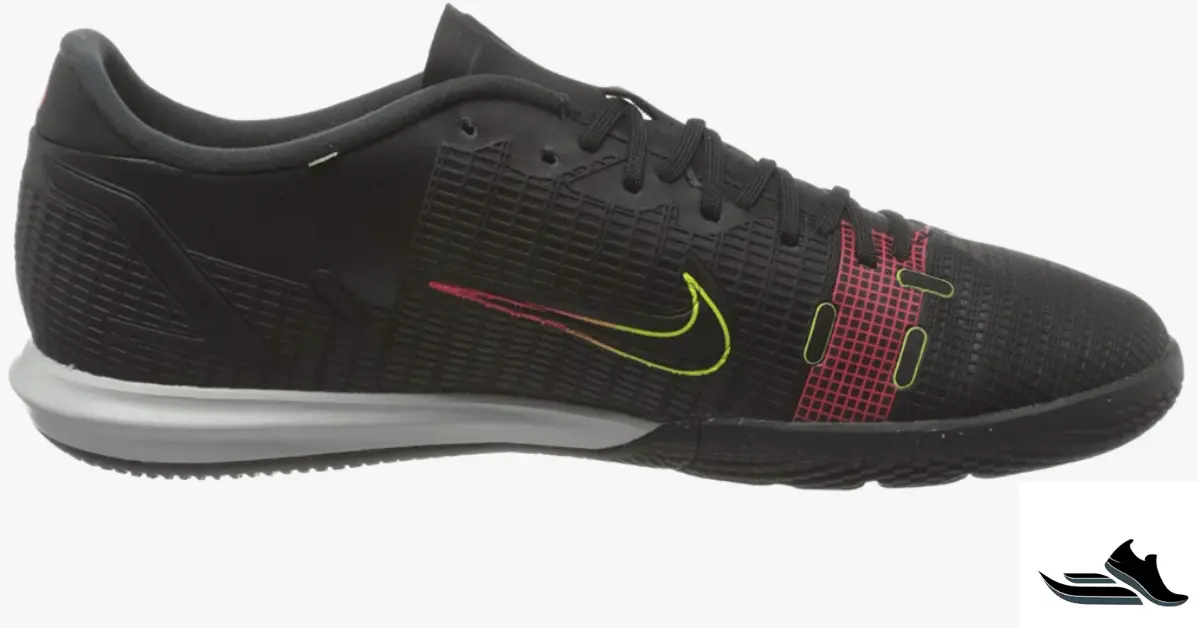
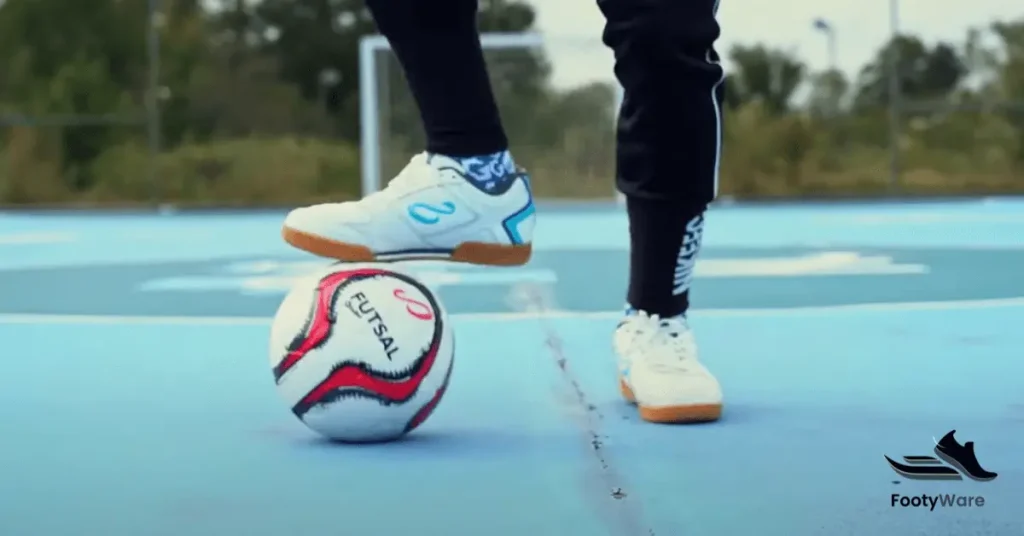
Indoor Soccer/Futsal Shoes for Flat Feet
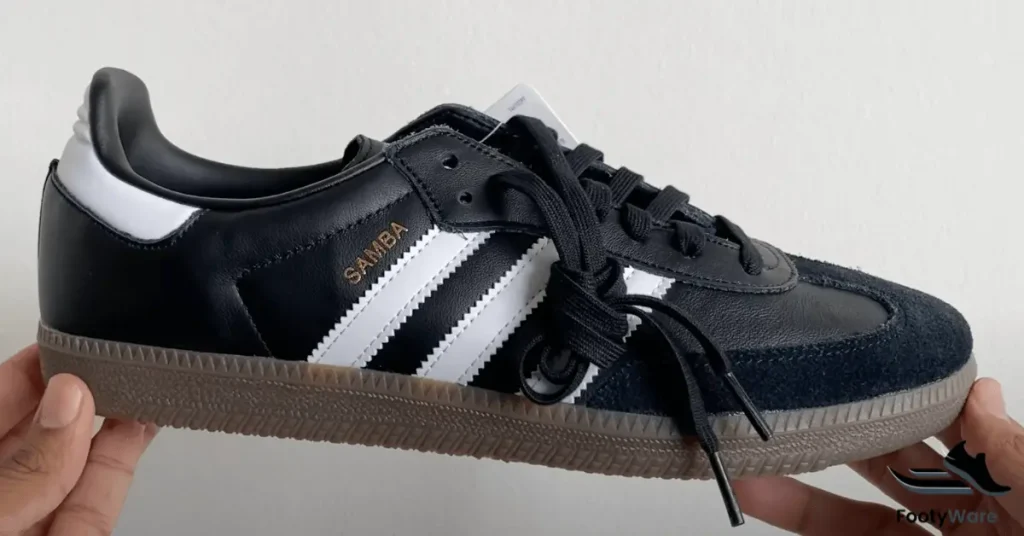
1. Adidas Samba Classic
Why It’s Great for Flat Feet:
- Classic arch support from decades-old design
- Firm midsole prevents collapse
- Snug, supportive fit throughout
- Durable construction maintains support over time
- Works well with custom orthotics
Key Features:
- Kangaroo leather upper (molds to foot)
- Flat gum rubber outsole (indoor courts)
- Traditional lacing for secure fit
- Low-profile design
Best For: Indoor soccer, futsal, players wanting classic support Price: $70-90 Flat Feet Rating: ⭐⭐⭐⭐ (4/5)
2. SENDA Ushuaia Pro 2.0
Why It’s Great for Flat Feet:
- Exceptional comfort right out of box
- Good cushioning for hard court impact
- Supportive structure without being rigid
- Roomy toe box
Key Features:
- Synthetic upper with mesh panels
- Gum rubber non-marking outsole
- Padded collar and tongue
- Breathable design
Best For: Comfort-focused players, those needing immediate wear Price: $80-110 Flat Feet Rating: ⭐⭐⭐⭐ (4/5)
3. Mizuno Morelia Sala Elite/Club
Why It’s Great for Flat Feet:
- Mizuno Wave plate technology provides arch support
- Natural anatomical fit
- Premium construction quality
- Excellent for wider feet
Key Features:
- Kangaroo leather upper (Elite) or synthetic (Club)
- Wave plate in midsole
- Non-marking outsole
- Japanese craftsmanship
Best For: Players wanting premium support and quality Price: $50-180 (depending on model) Flat Feet Rating: ⭐⭐⭐⭐⭐ (5/5)
4. New Balance Audazo/Furon Indoor
Why It’s Great for Flat Feet:
- New Balance’s stability expertise
- Built-in arch support
- Available in wide sizes
- Designed with foot biomechanics in mind
Key Features:
- Synthetic or mesh upper
- Fresh Foam cushioning
- REVlite midsole (lightweight support)
- Flat IC outsole
Best For: Players needing proven stability technology Price: $50-90 Flat Feet Rating: ⭐⭐⭐⭐⭐ (5/5)
Outdoor Soccer Cleats for Flat Feet
5. Nike Tiempo Legend (All Versions)
Why It’s Great for Flat Feet:
- Cushioned, supportive construction
- Comfortable fit accommodates orthotics
- Premium leather molds to flat feet
- Stable platform
Key Features:
- Kangaroo leather upper (premium) or synthetic leather
- Cushioned sockliner
- Conical studs (stable traction)
- Classic, proven design
Best For: All-around comfort and support outdoors Price: $80-250 (depending on tier) Flat Feet Rating: ⭐⭐⭐⭐⭐ (5/5)
6. Adidas Copa (Mundial, Pure, Sense)
Why It’s Great for Flat Feet:
- Traditional supportive construction
- Firm, stable platform
- Leather upper provides structure
- Proven for decades
Key Features:
- Leather upper (kangaroo or calfskin)
- EVA midsole cushioning
- Classic stud configuration
- Durable and supportive
Best For: Players wanting traditional support and quality Price: $70-200 Flat Feet Rating: ⭐⭐⭐⭐⭐ (5/5)
7. New Balance Tekela/Furon (Outdoor)
Why It’s Great for Flat Feet:
- Stability-focused design
- New Balance’s biomechanical expertise
- Available in wide sizes
- Modern support technology
Key Features:
- Synthetic uppers with support zones
- Fresh Foam or REVlite midsole
- Medial support features
- FG or AG studs
Best For: Modern players needing proven stability Price: $60-200 Flat Feet Rating: ⭐⭐⭐⭐⭐ (5/5)
8. Mizuno Morelia/Rebula (Outdoor)
Why It’s Great for Flat Feet:
- Wave plate technology
- Anatomical fit
- Excellent for wide feet
- Japanese quality construction
Key Features:
- Kangaroo leather (Morelia) or synthetic (Rebula)
- Mizuno Wave support system
- Lightweight yet supportive
- Various stud configurations
Best For: Players wanting premium support outdoors Price: $80-250 Flat Feet Rating: ⭐⭐⭐⭐⭐ (5/5)
9. Puma King (All Versions)
Why It’s Great for Flat Feet:
- Classic supportive design
- K-leather upper provides structure
- Stable, traditional construction
- Comfortable for flat feet
Key Features:
- K-leather upper
- EVA midsole
- Conical studs (stable)
- Heritage design
Best For: Traditional players wanting leather support Price: $70-200 Flat Feet Rating: ⭐⭐⭐⭐ (4/5)
Budget-Friendly Options for Flat Feet
Under $70:
- Adidas Copa Mundial (if on sale) – Classic support
- Joma Top Flex (indoor) – Decent arch support
- Diadora Maracana – Traditional construction
- Umbro Speciali – Classic design, supportive
Custom Orthotics and Insoles for Soccer Shoes
Even the best soccer shoes benefit from specialized insoles for flat feet.
Best Aftermarket Insoles for Flat Feet
1. CURREX CleatPRO Low Arch
Features:
- Specifically designed for cleats and flat feet
- Dynamic arch support
- Shock absorption
- Moisture-wicking
- Slim profile fits most cleats
Price: $50-60 Best For: Soccer-specific support Rating: ⭐⭐⭐⭐⭐
2. Superfeet BLUE (Low Arch)
Features:
- Deep heel cup
- Biomechanical shape for flat feet
- Durable construction
- Odor control
- Proven brand
Price: $50-55 Best For: Maximum structural support Rating: ⭐⭐⭐⭐⭐
3. Spenco Polysorb Total Support
Features:
- Three-pod cushioning system
- Arch and metatarsal support
- Anti-microbial
- Affordable
- Available in various sizes
Price: $30-40 Best For: Budget-conscious players Rating: ⭐⭐⭐⭐
4. Powerstep Pinnacle
Features:
- Dual-layer cushioning
- Built-in arch support
- Heel cradle
- Anti-microbial fabric
- Trusted by podiatrists
Price: $40-50 Best For: All-day support and cushioning Rating: ⭐⭐⭐⭐
Custom Orthotics from Podiatrist
When to Consider:
- Severe flat feet (rigid pes planus)
- Persistent pain despite good shoes
- History of recurring injuries
- Professional/competitive level play
Process:
- Visit podiatrist or sports medicine specialist
- Foot examination and gait analysis
- Custom mold created
- Orthotics fabricated (2-3 weeks)
- Fitting and adjustments
Cost: $300-800 (often insurance covered)Benefits: ✓ Perfect fit for your unique feet ✓ Addresses specific biomechanical issues ✓ Maximum support and correction ✓ Long-lasting (1-3 years) ✓ Can be moved between shoes
What are Flat Feet?
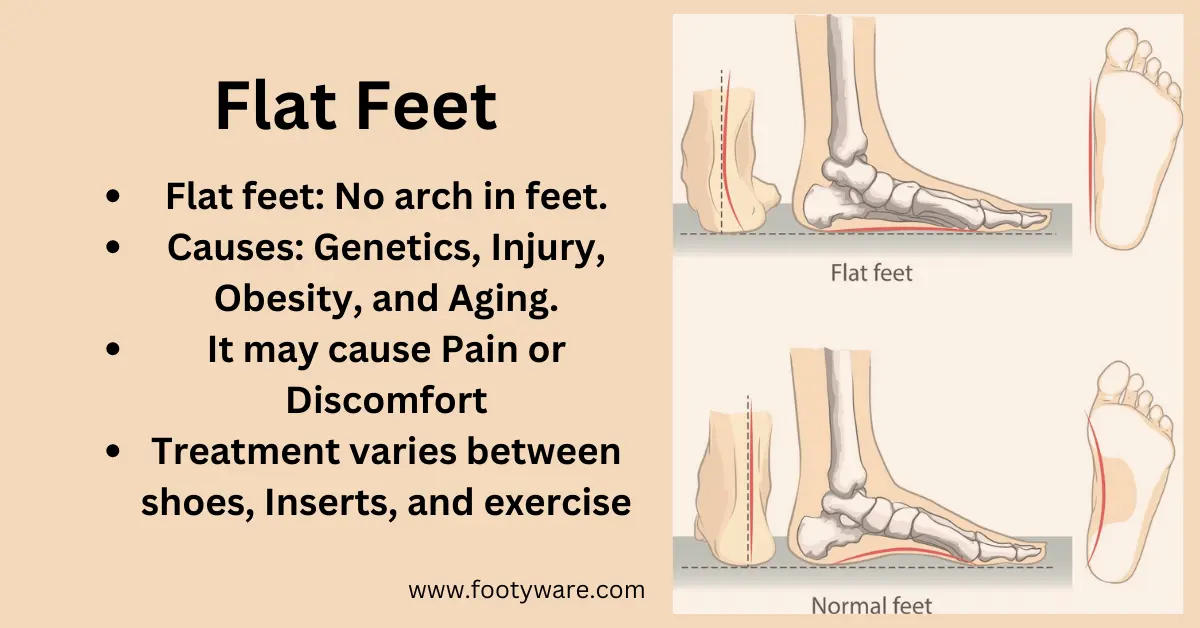
Flat feet are feet having no arch or less arch which means your feet are flat. You can also check it by applying ink below your feet and then walking on white chart paper you’ll analyze it from your foot mark whether your feet are flat or not.
I have already mentioned both types of feet so that you can analyze them easily. Flat feet are almost 20-30 percent of the total population so it’s very normal if you have flat feet.
If you still aren’t clear about what flat feet are simply if the entire area of your foot sole touches the ground including the instep area means that it’s flat feet. I hope now you understand.
If you have flat feet there is nothing to worry about because according to health experts at NHS say that it’s very normal but you’ve taken care of yourself and do routine checkups with your physician. It’s going to be very normal.
How do you know if you’ve Flat Feet?
I have already explained the difference between flat feet and normal feet so if you want to check if you have flat feet or not as I have explained earlier the trick of applying ink on the sole of your feet and walking on a white chart paper is appropriate.
If you see ink print on paper of the whole sole means your whole sole touches the ground including the instep area You know exactly if you have flat feet. You can also look at the bottom of your feet to check if you have flat feet or not.
Other than you will have some medical issues which are common in players having flat feet. You’ll feel discomfort in your feet or slight pain in your joints but you will face this after playing on a hard and flat surface for a long time.
You’ll face aches in your soles and tiredness in your whole feet while standing still for a long period or walking on rough ground having ups and downs.
So, it’s better to avoid playing on hard surfaces such as concrete but if you still want to play then I would like to suggest you one of the most comfortable shoes, or if you want to check a list of comfortable indoor soccer shoes you can read and have the one that’s tested.
If you are facing any of the above issues do consult a professional physician who can give you better advice after examining you.
How to minimize or Fix Flat Feet?
You can minimize flat and even try to fix this completely but make sure you have been examined by a professional physician. I will be telling you some fixes that I have experienced through my friends having flat feet.

First of all, you should wear shoes that support your feet having arch support and form that is going to provide ease to you and prevent it from increasing. There are specially designed indoor soccer shoes for flat feet recommended by orthopedics to have perfect arch support.
Flat feet are hereditary and very common in kids so you cannot get rid of them easily but you’ve to adjust to them. You can put insoles in your shoes. This helps those having plantar fasciitis and makes them feel comfortable.
You have done proper exercise to strengthen your muscles and train your ankles for any type of surface so that your feet absorb the impact effortlessly. You can watch and perform exercises on YouTube for ankle strengthening(ankle rotation, back and forth movement of the ankle, heel raises) and muscle flexibility exercises.
You should also be considering losing weight which will decrease stress on your joints. Losing weight will make you do exercise as a result your muscles will gain strength and will feel less pain in your feet and joints.
Avoid activities that need rigorous training because it will stress your muscles and you will feel discomfort. It’s better to avoid activities like running hard tracks, and long jumps which worsen the situation.
Exercises and Stretches for Flat-Footed Soccer Players
Strengthening foot and ankle muscles can help manage flat feet and reduce injury risk.
Strengthening Exercises
1. Towel Scrunches
How to Do It:
- Place towel flat on floor
- Sit in chair, place bare foot on towel
- Use toes to scrunch towel toward you
- Repeat 15-20 times per foot
- Do 2-3 sets daily
Benefits: Strengthens intrinsic foot muscles, builds arch
2. Arch Lifts
How to Do It:
- Stand barefoot
- Lift arch while keeping toes and heel on ground
- Hold 5-10 seconds
- Relax and repeat 10-15 times
- Progress to single-leg version
Benefits: Activates arch muscles, improves foot control
3. Heel Raises
How to Do It:
- Stand with feet hip-width apart
- Rise onto toes slowly
- Hold at top for 2 seconds
- Lower slowly
- Do 15-20 reps, 3 sets
Benefits: Strengthens calves and Achilles, supports arch
4. Ankle Rotations
How to Do It:
- Sit or stand on one leg
- Rotate ankle in circles (clockwise)
- 10 rotations, then reverse (counterclockwise)
- Repeat on other ankle
- Do 2-3 sets
Benefits: Improves ankle stability and mobility
5. Single-Leg Balance
How to Do It:
- Stand on one leg
- Hold for 30-60 seconds
- Progress by closing eyes
- Further progress on unstable surface (pillow)
- Repeat on other leg
Benefits: Enhances ankle stability, balance, proprioception
Stretching Exercises
1. Plantar Fascia Stretch
How to Do It:
- Sit and cross one leg over other
- Pull toes back toward shin
- Hold 20-30 seconds
- Repeat 3 times per foot
Benefits: Relieves plantar fascia tension
2. Calf Stretch
How to Do It:
- Face wall, hands on wall
- Step one leg back (straight)
- Bend front knee, keep back heel down
- Hold 20-30 seconds per leg
- Repeat 3 times
Benefits: Stretches gastrocnemius and soleus
3. Achilles Stretch
How to Do It:
- Same as calf stretch
- Bend both knees slightly
- Targets lower calf/Achilles
- Hold 20-30 seconds
- Repeat 3 times per leg
Benefits: Maintains Achilles flexibility
In the end, I would suggest you go see a doctor do a proper checkup, and take a specific diet. Never skip your therapy session they are going to provide you with real comfort. You can easily live and healthy and active life just be disciplined.
Low-arch Insole for Soccer Players with Flat Feet
For flat feet to play soccer shoes should have a low arch because a proper arch while playing will discomfort players having flat feet because their feet roll inward and the distribution of weight becomes uneven which results in pain and discomfort.
While playing soccer if you already selected a boot that works well for you and you want to optimize it so that it can give you enhanced support. Try adding an insole recommended by physicians (CURREX CleatPRO Insole) and it’ll help you distribute your weight equally across your feet. This can be used for basketball too.

Insoles already in are best for players having normal feet but for flat feet to increase arch support. The normal insole is thin comparatively while for flat feet you need a thick one to increase arch and make you feel comfortable.
The shoe must be very comfortable and a little wide but can grab feet like a sock, give much-needed support, and prevent injuries. You can have these features in a shoe if a shoe is flexible and comfortable that can give you firm support.
If your weight is equitably distributed in the shoe you’ll be comfortable but if not chances of injuries also increase apart from your discomfort. Low arch is going to provide you extra support during indoor soccer on flat surfaces.
If your feet are fully flat then you should have customized shoes for your feet that can help you minimize the discomfort you’re facing. It can be made with the help of different materials like foam, gel, and plastic. They are usually placed inside your shoe.
You’ll face discomfort in the start because it takes time to break in but gradually you’ll feel comfortable. Through these techniques, you can manage to minimize the pain you are going through. This all has been faced by my younger brother so I know this very well as I used to drive him to the hospital.
So it’s better to consult a professional physician.
Can you play Soccer with Flat Feet?
Yes, you can play soccer with flat feet but you’ll feel discomfort while playing soccer so to minimize this you have to follow the instructions already mentioned above. Further, you have to do the necessary exercise to prevent your feet from flatness.
You should avoid rigorous activities like playing soccer on hard and unbalanced surfaces like concerts. Also, avoid cleats to play soccer in them instead use grippers so that you cannot come hard on your feet.
If you have got flat feet I would suggest you wear supportive shoes that can support your feet with foam, give proper cushioning to your less arch, and divide all weight across your feet to prevent potential injury.
The best thing you can do is to strengthen your muscles so that you can bear weight in an awkward position. For this, you’ve to work hard in the field and gym and leave your comfort zone to play soccer to the fullest. You can follow strengthening exercises on YouTube.
Keep in mind that you know your body more than anyone else so you are the best judge Don’t go too rough on your body just gradually add something to your routine to make your muscles flexible and strong. Take breaks in between too.
I would also suggest you avoid competitive indoor soccer, futsal, basketball, and volleyball if your condition is severe but if you think that you’re fine then you can carry on playing while applying all the precautionary measures.
Lifestyle Tips for Flat-Footed Soccer Players
Weight Management
Why It Matters: Excess weight increases stress on flat feet and joints.
Recommendations:
- Maintain healthy BMI (18.5-24.9)
- Lose excess weight gradually (1-2 lbs/week)
- Combine diet and exercise
- Reduces joint stress by 3-4x per pound lost
Gradual Activity Progression
Why It Matters: Flat feet need time to adapt to increased activity.
Recommendations:
- Increase training volume slowly (10% per week)
- Allow adequate rest between sessions
- Don’t jump from inactive to intense training
- Listen to your body’s signals
Surface Selection
Avoid When Possible: ❌ Concrete (extremely hard, high impact) ❌ Worn artificial turf (inconsistent, hard base) ❌ Uneven surfaces (increases injury risk)
Prefer: ✓ Natural grass (softer, shock-absorbing) ✓ Quality artificial turf (consistent, some give) ✓ Indoor courts (controlled, flat) ✓ Cushioned surfaces when training
Proper Recovery
Essential Practices:
- Ice feet after intense sessions (15-20 min)
- Foam roll calves and feet
- Adequate sleep (7-9 hours)
- Stay hydrated
- Consider massage therapy
Regular Check-Ups
Medical Monitoring:
- Annual foot exam with podiatrist
- Address pain early (don’t play through it)
- Update orthotics as needed (every 1-3 years)
- Gait analysis if changing shoes or having issues
Professional Soccer Players with Flat Feet

Approximately 30 percent of the population have flat feet. You can also see multiple futsal players having flat feet. You can assume that 30 percent of soccer players are also having flat feet but they have remained very professional so it doesn’t affect their performance.
Flat feet don’t prevent elite-level soccer success. Many world-class players have flat feet:
Notable Flat-Footed Soccer Stars
Lionel Messi 🇦🇷
- 8x Ballon d’Or winner
- Uses custom orthotics
- Proves flat feet no barrier to greatness
Karim Benzema 🇫🇷
- Ballon d’Or winner (2022)
- Champions League top scorer
- Elite striker with flat feet
Marcelo 🇧🇷
- Multiple Champions League winner
- Dynamic left-back
- Managed flat feet throughout career
Miroslav Klose 🇩🇪
- World Cup all-time top scorer (16 goals)
- Elite header of ball
- Successful despite flat feet
Other Notable Players:
- Diego Costa 🇪🇸
- David Villa 🇪🇸
- Jordan Henderson 🏴
- Koke 🇪🇸
- Dani Alves 🇧🇷
- Kaká 🇧🇷
Key Takeaway: With proper footwear, orthotics, and conditioning, flat feet don’t limit potential. These players prove you can reach the highest levels.
Difference between Normal and Flat Feet

The main difference in normal feet is arch while flat feet are archless. It means that if you can see the curve under your feet inside then they are normal but if they are straight means the whole foot is touching the ground and you don’t see space underneath. You can feel this while standing straight.
One more thing for soccer players having flat feet is that while buying a shoe always wear the shoe and stand straight because while standing your feet will be wider due to the weight on your feet You’ll know your actual size and choose accordingly that will support you.
Your big toe should be comfortable because during the game you’ve to run on your toes. Most of your weight is on your big toe and index finger so check if they are comfortable enough. If they aren’t comfortable your body weight won’t be distributed equitably and can result in the form of injury.
Recommendations:
- The shoe must be very comfortable after wearing it
- Best arch support for even weight distribution
- Wider boot with more room in for a big toe
- Wider opening or sock construction to adjust your feet easily; classic tongue structure is good
- Better to go with an astroturf sole
The main job of the arch is to absorb the shock while jumping or any other physical activity. It helps in absorbing the impact and prevents your joints from stress but if you see flat feet your joints collide which increases friction and damages internal tissues.
That’s the reason most flat feet feel joint issues at an early age. To minimize this you’ve to consult your doctor and follow a disciplined workout routine to strengthen your muscles and minimize the pain and discomfort in your joints like knees and hips.
The main cause of flat feet is genetic so it’s very normal to have flats you just have to be a little disciplined to follow a healthy routine and do your necessary exercise. With proper care, you can play and enjoy sports normally and achieve your target of becoming the best.
Issues you may face due to Flat Feet playing Soccer
You just have to be conscious of your health and do the necessary work for your best body physique. In the end, flat feet are very normal so just don’t panic and live to enjoy it.
The potential issues you may face due to flat feet are:
- Overpronation: Flat feet if not taken care of lead to overpronation due to stress on joints ankles, knees, and hips and not absorbing the impact of physical activity properly. You can overcome this by following a properly disciplined routine of exercise as told by your physicians.
- Foot Pain: You also feel foot pain which causes discomfort. So to minimize this you should limit your rigorous physical activity. For example, if you are hiking or doing tough exercise you should take a pause and consult your doctor.
- Shin Splints: You can also feel shin splits in severe issues which is less than a 1% chance that you’ll feel pain in your lower leg or a little discomfort.
- Plantar Fasciitis: Sometimes Planter fascia occurs in flat feet which feel pain in the lower part of the heel. This is due to additional stress on your feet. So avoid lifting too much weight if you are a straight foot, person.
- Ankle sprains: You’ll feel ankle sprains which are normal in flat feet. This is due to a lack of arch support and doing unbalanced activity in which the weight of our body is not properly distributed like hiking or playing soccer on hard surfaces like concrete.
- Knee pain: Knee pain is also a form of joint pain caused due to high-impact activities performed on a hard surface leading to slight pain and discomfort.
- Back pain: Spinal alignment is all joints. If you are facing issues related to your ankle and knees means your body is unable to absorb the impact properly so the impact goes to your lower back which feels discomfort
These are potential issues but you can overcome them very easily you’ve to control your weight according to your BMI which causes less impact on your body’s joints. Other than that you have to follow a proper exercise routine.
You should wear supportive shoes to minimize the impacts and to give support to your feet. Place an insole in your shoes recommended by physicians and most importantly go to the gym to strengthen your muscles to make them eligible to absorb impact.
These are just the basics by following them you can avoid discomfort easily. I hope you’ll feel at ease after reading and implementing these practices practically.
Interesting facts about Flat Feet
How do we Test Soccer Boots?
Testing football boots is a basic and very vigilant process to go through this one must be skilled in this art. As far as I am in the game it’s almost a decade now and I really know what value soccer shoes can bring if they are optimal.
So to test or review a shoe we take the following points into account.
Testing a boot in real-life situations where it’s going to be used. Like if I am reviewing an indoor soccer shoe I will personally test it in real games and drills and check its on-field performance.
If I have to review a shoe for the firm ground I’ll first test it for weeks on firm ground in various conditions and then recommend it. This is what I love to do because sports has always been my passion.
This is the basic but very important stage to recommending something to others. So to break the stereotypes after testing them I make them wear my author and whoever is providing me the input regarding that specific shoe. I make sure this to done with utmost honesty.

I’ll always give you a clear picture of what to buy for a specific surface and also recommend top products you can buy without even thinking about their quality and specifications.
We’re a small brand but honest with our work due to which I have never compromised on a realistic picture of the product Brands do approach us but they can’t buy our loyalty which is the utmost one can have in this ordinary world.
I have been related to soccer for almost 10 years and in between, I have played basketball, long tennis, and table tennis so I am in a better position to guide you through the whole process and never fall for the marketing gimmick of big brands.
I am saying this because I have attended webinars, and Q’s and A’s of some notable indoor soccer shoe brands, and they just want to sell apart from some brands who value their customers.
Conclusion: Playing Soccer Successfully with Flat Feet
Flat feet don’t have to limit your soccer performance or enjoyment. With the right combination of supportive footwear, custom orthotics, strengthening exercises, and smart training practices, you can play at your full potential while minimizing discomfort and injury risk.
Key Takeaways:
✓ 20-30% of people have flat feet—it’s extremely common ✓ Elite players like Messi have flat feet and reach the highest levels ✓ Proper shoes matter: Look for arch support, stability tech, cushioning, roomy toe box ✓ Top picks: Nike Tiempo, Adidas Copa, New Balance Tekela, Mizuno Morelia, Adidas Samba ✓ Always add insoles: CURREX CleatPRO, Superfeet BLUE, or custom orthotics ✓ Strengthen your feet: Exercises build arch support naturally ✓ Manage your weight: Reduces stress on flat feet and joints ✓ Don’t ignore pain: Address issues early with medical professionals
Remember that finding the perfect shoe is a personal process. What works for one flat-footed player may not work for another. Try on multiple options, test them in realistic playing conditions, and don’t hesitate to invest in quality footwear and orthotics—your feet, joints, and long-term soccer career will thank you.
Embrace your flat feet as just another aspect of your unique physiology, not a limitation. With proper care and equipment, you can focus on what matters most: playing the beautiful game you love.