
Can You Use Indoor Soccer Shoes on Turf? Complete Guide (2026)
Quick Answer: While you can use indoor soccer shoes on turf for casual play, they’re not ideal for competitive games. Indoor shoes have flat gum rubber soles designed for hard courts, while turf requires shoes with small rubber studs for optimal traction and safety.
Understanding the Difference: Indoor vs Turf Soccer Shoes
The fundamental difference between indoor and turf soccer shoes lies in their outsole design, which directly affects your performance and safety on different playing surfaces.
Indoor Soccer Shoes:
- Flat gum rubber outsoles
- Designed for hard, smooth surfaces like gym floors and futsal courts
- Maximum surface contact for grip on polished surfaces
- Lightweight with excellent ball control
Turf Soccer Shoes:
- Better shock absorption for outdoor play
- Multiple small rubber studs across the outsole
- Built for artificial turf with rubber pellet infill
- Enhanced traction on slightly uneven surfaces
Can Indoor Soccer Shoes Work on Turf?
The short answer is yes, but with significant limitations. Indoor soccer shoes can function on turf surfaces for recreational play, but they’re not optimal for several reasons:
When Indoor Shoes Can Work on Turf
- Casual kickabouts with friends
- Light training sessions
- Walking or warming up on turf
- Playing at reduced intensity
When You Should NOT Use Indoor Shoes on Turf
- Competitive matches
- High-intensity training
- Wet or damp turf conditions
- Games requiring quick directional changes at speed
The flat sole of indoor shoes lacks the grip needed for explosive movements on turf, increasing your risk of slipping during sharp cuts, quick pivots, and sudden stops.
Choosing the Right Shoe for Each Surface
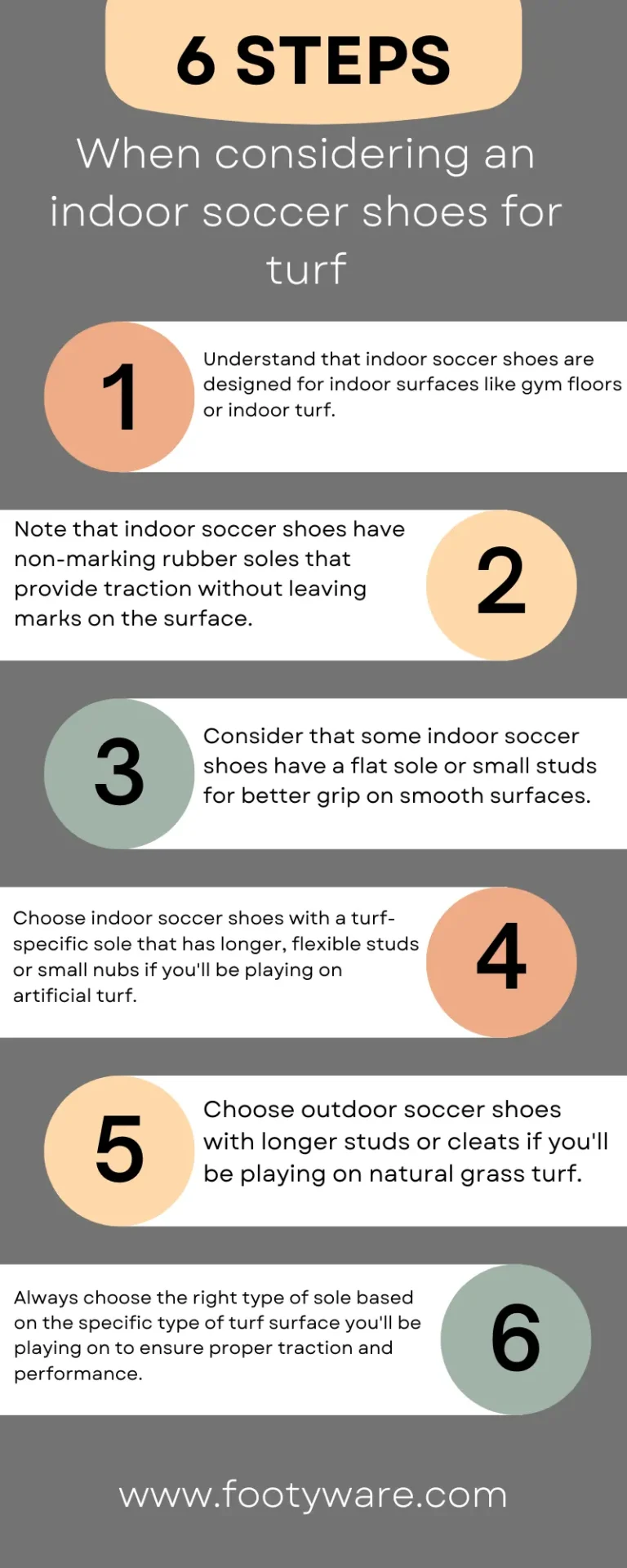
Best Shoes for Indoor Soccer (Hard Court/Futsal)
Indoor soccer shoes are specifically engineered for flat, hard surfaces:
Key Features:
- Flat gum rubber outsole for maximum surface contact
- Non-marking sole (important for gym floors)
- Lightweight construction for agility
- Breathable upper materials
- Enhanced ball feel and control
- Minimal cushioning (the court provides stability)
Ideal Surfaces:
- Any smooth, hard indoor surface
- Wooden gym floors
- Futsal courts
- Basketball courts (with removable nets)
- Any smooth, hard indoor surface
Best Shoes for Turf Surfaces
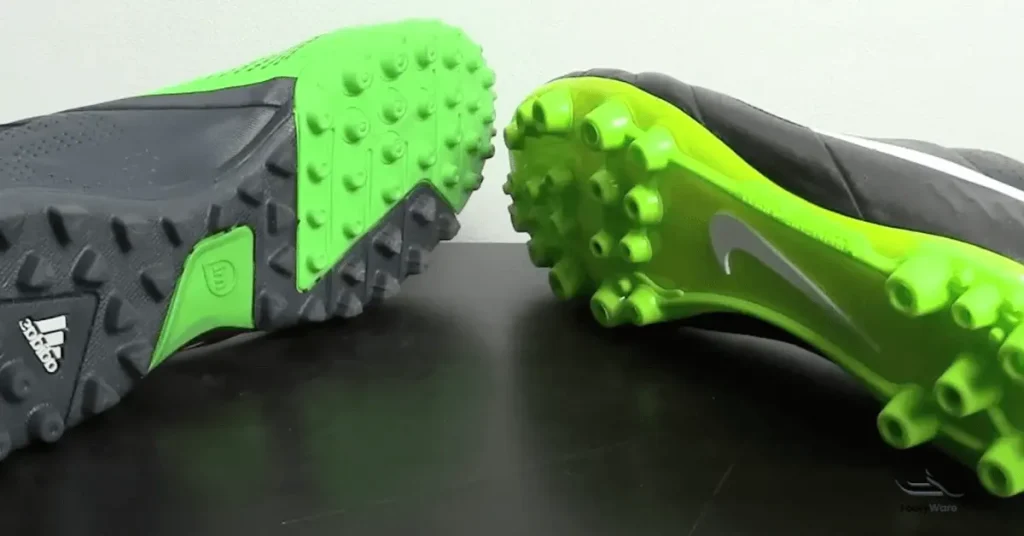
Turf shoes are designed with artificial grass in mind:
Key Features:
- Dozens of small, evenly distributed rubber studs
- Enhanced cushioning in the midsole
- Durable upper materials
- Better ankle support than indoor shoes
- Shock-absorbing properties
Ideal Surfaces:
- Multi-use outdoor sports facilities
- Artificial turf fields
- Training grounds with synthetic grass
- Multi-use outdoor sports facilities
Indoor Soccer Shoes for Flat Surface
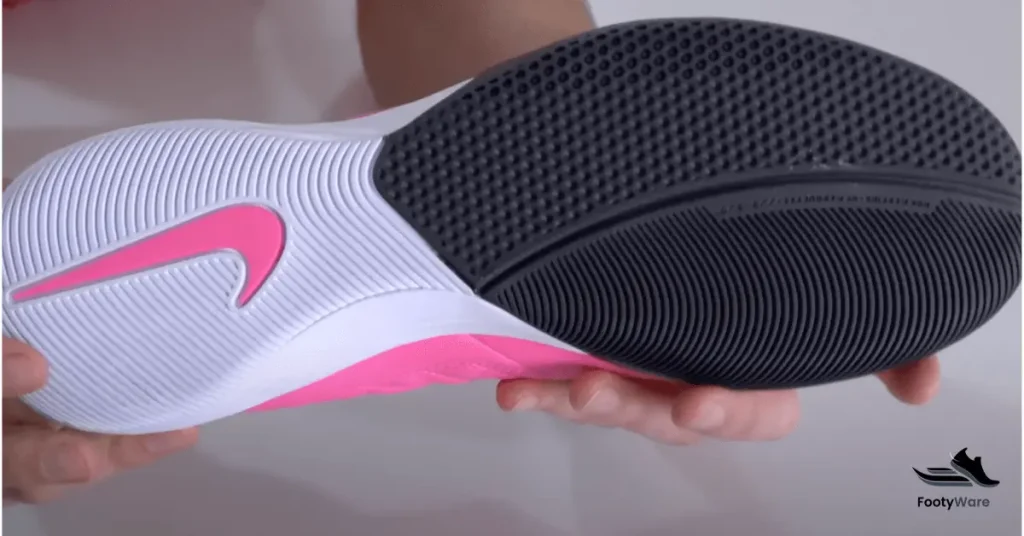
The flat surfaces can be of different types. They’re mostly indoor like wooden floors, the shiny flat court of futsal or basketball even you can play in a volleyball court but if the net and both poles are removable means they’re not permanently installed.
Best shoes for indoor soccer for kids and adults on flat surfaces are very prominent as their outsole is flat to increase the area and provide you with the best grip that’s needed in futsal. Sharp back-and-forth movements are on top while playing in shoes designed specifically for specific surfaces because this matters a lot.
While buying indoor soccer shoes read reviews of those who have tested it or the ones who are experts or spend time playing soccer for quite some time and keep these in mind. Indoor soccer shoes must have proper cushioning, with perfect support to your ankles with that they should be a snug fit and the upper of the shoe should be shiny to help you control the ball.
Being confident with the ball is the key to winning games.
Design of Indoor Soccer Shoes for Flat Surfaces
Shoes designed for indoor soccer should be lightweight with proper traction on flat surfaces. The shoe must possess a flat outsole with gum rubber on its sole to provide you with the best grip with a properly structured pattern best for grip on hard, flat, and shiny surfaces.
The shoe should be flexible with proper cushioning to provide you support during rough games to protect your ankles and calf muscles to minimize the chances of being injured when your team needs you the most. Preferred for a flat surface having a snug fit.
Shoes for Firm Ground (Natural Grass)
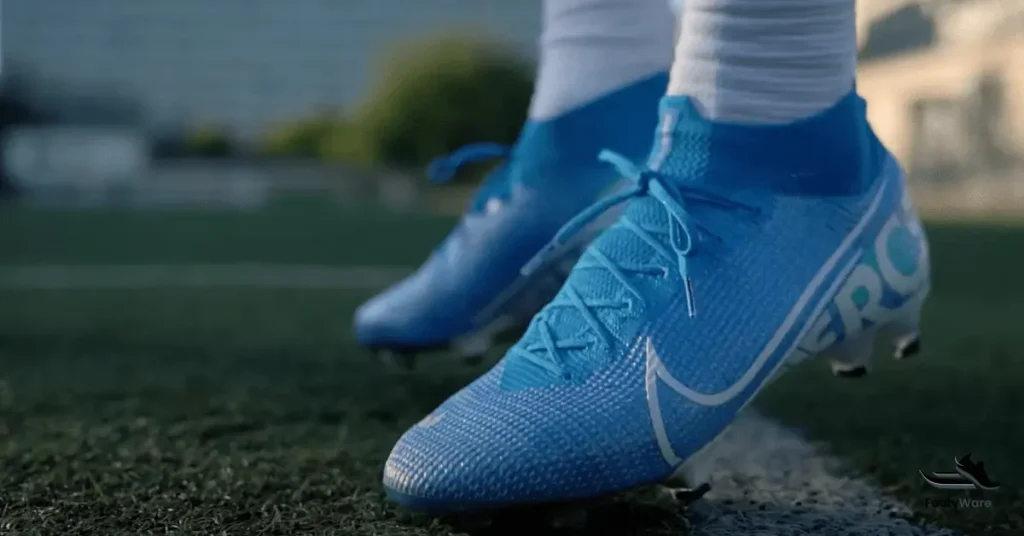
Firm ground cleats work on natural grass fields that are dry and well-maintained:
Key Features:
- Molded plastic or rubber studs (longer than turf studs)
- Strategic stud placement for traction
- Flexible soleplate
- Weather-resistant materials
Best For:
- Natural grass fields
- Outdoor soccer pitches
- Training on grass
Design of Soccer Shoes for Firm Ground
The shoe used for firm ground must possess plastic studs or rubber studs but these must be flexible and soft. If you’re playing on artificial grass then go for shoes having small rubber studs mostly round.
Firm ground shoes are very durable and built with quality materials like leather or synthetic of good material. They should be very good impact absorbers with proper traction which is dependent upon its outsole and quality midsole cushioning.
Shoes for Soft Ground (Wet/Muddy Conditions)
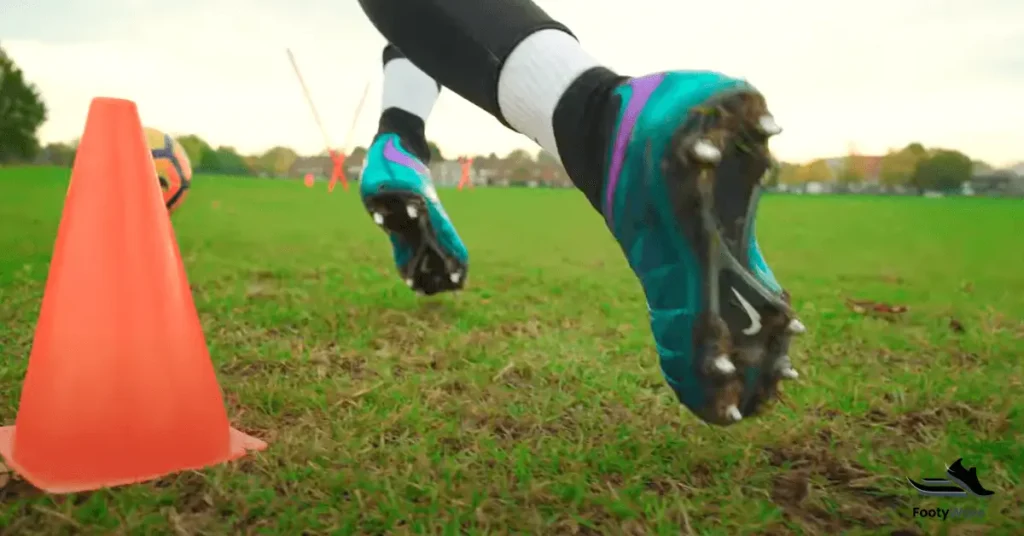
Soft ground cleats are designed for wet, muddy natural grass:
Key Features:
- Metal studs (often removable/replaceable)
- Longer stud length for deep penetration
- Waterproof construction
- Maximum traction in soft conditions
NEVER USE METAL STEEL STUDS ON HARD GROUND OR ARTIFICIAL SURFACES, THIS CAN CAUSE SERIOUS INJURY AND DAMAGE THE PLAYING SURFACE.
Design Soccer Shoes for the Soft, Muddy, and Grassy Ground
For soft muddy ground, you need a shoe that can give you the best traction on soft pitches. Plastic studs cannot fulfill it because you’ll be at a clear disadvantage to your rivals. So, you need shoes with long steel studs like players use in professional football now.
The shoe must be waterproof with a good amount of cushioning so that you can be protected during harsh tackles in the best possible way. It’s very common as you see in the English Premier League, especially on derbies where stakes are high and player lose their cool.
It is better to use specific shoes for a specific surface I am emphasizing this because I have been through injuries due to the wrong choice of shoes so better avoid playing in a shoe on different surfaces.
How to Choose the Right Soccer Shoe: 7 Essential Factors
1. Surface Type
Match your shoe to your primary playing surface. If you play on multiple surfaces, consider investing in two pairs rather than compromising with one versatile option.
2. Fit and Comfort
Your soccer shoes should fit snugly without being tight. Leave about a thumb’s width at the toe, and ensure the heel doesn’t slip. Remember:
- Leather shoes may stretch over time
- Synthetic materials maintain their shape better
- Always try shoes with the socks you’ll wear during play
3. Traction Requirements
- Consider the grip you need:
Indoor: Flat sole for controlled grip - Turf: Multiple small studs for balanced traction
- Firm ground: Molded studs for natural grass
- Soft ground: Metal studs for muddy conditions
4. Budget and Value
Quality soccer shoes range from $40 to $300. While you don’t need the most expensive option, avoid the cheapest shoes, which often sacrifice durability and comfort.
Budget Tips:
- Mid-range shoes ($60-$120) offer the best value
- Last season’s models are often heavily discounted
- Invest more if you play competitively or frequently
5. Material Quality
Leather (Kangaroo or Calfskin):
- Superior touch and ball feel
- Molds to your foot over time
- Requires more maintenance
- Generally more expensive
Synthetic Materials:
- More affordable
- Weather-resistant
- Low maintenance
- Consistent fit over time
- Often more breathable
6. Durability
- Consider how often you play:
1-2 times per week: Mid-range shoes should last 6-12 months - 3-5 times per week: Invest in higher-quality shoes
- Daily training: Budget for replacement every 4-6 months
7. Protection and Support
Look for shoes with:
Adequate ankle support
- Cushioned collar
- Reinforced toe box
- Padded midsole for shock absorption
The Risks of Using the Wrong Shoes
Using indoor shoes on turf or vice versa can lead to:
Performance Issues:
- Reduced traction and ball control
- Slower reaction times
- Compromised agility
Injury Risks:
- Ankle sprains from slipping
- Knee strain from inadequate support
- Muscle fatigue from poor shock absorption
- Increased joint stress
Equipment Damage:
- Damage to playing surfaces (especially metal studs on hard surfaces)
- Premature wear on shoe outsoles
Expert Tips for Multi-Surface Play
If you must use one pair of shoes across multiple surfaces:
- Choose turf shoes as your versatile option – they work reasonably well on firm ground and can handle indoor courts for casual play
- Avoid indoor shoes on outdoor surfaces – the flat sole wears quickly and provides inadequate grip
- Never use metal studs on anything but soft, natural grass
- Inspect your shoes regularly – worn outsoles significantly reduce traction
- Clean your shoes after each use – dirt and debris reduce grip and accelerate wear
Conclusion: Choose the Right Tool for the Job
While indoor soccer shoes can technically be used on turf for casual recreational play, they’re not designed for this purpose and will compromise your performance and safety in competitive situations.
For best results:
- Use indoor shoes exclusively on hard, flat surfaces
- Invest in turf-specific shoes if you regularly play on artificial grass
- Match your footwear to your playing surface for optimal performance and injury prevention
The right footwear enhances your touch, protects your joints, and gives you the confidence to play your best game. Whether you’re a weekend warrior or a competitive player, choosing surface-appropriate shoes is one of the simplest ways to improve your performance and stay injury-free.
Remember: the beautiful game deserves beautiful footwork, and that starts with the right shoes on the right surface.