
Futsal Slide Tackles: Complete Rules, Safety & Techniques Guide
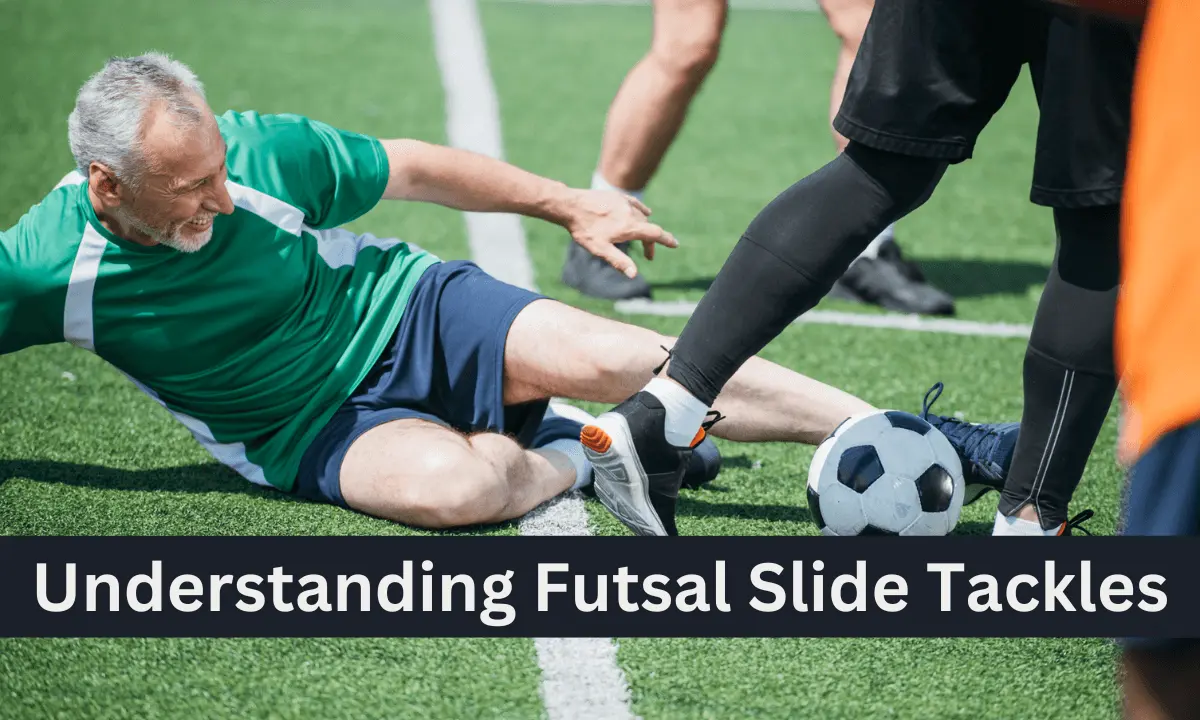
Quick Answer: Slide tackles in futsal are conditionally allowed but heavily restricted. You can slide to block shots or save the ball from going out of bounds without contacting opponents. However, sliding to dispossess an opponent is generally prohibited and results in a direct free kick. The hard court surface and player safety concerns make futsal’s slide tackle rules stricter than outdoor soccer.
What Are Slide Tackles in Futsal?
A slide tackle in futsal involves a player sliding along the ground to challenge for the ball, intercept a pass, block a shot, or prevent the ball from leaving the playing area. Unlike outdoor soccer where slide tackles are a common defensive tool, futsal heavily restricts this technique due to safety concerns on hard indoor courts.
Key Characteristics of Futsal Slide Tackles
Physical Action:
- Player leaves their feet and slides along the ground
- Uses momentum to reach the ball
- Can be executed with one or both legs
- Typically performed on knees, hip, or side
Critical Differences from Outdoor Soccer:
- More restricted in futsal due to hard surfaces
- Contact with opponent almost always penalized
- Primarily defensive, not for winning possession
- Requires greater precision and timing
- Higher injury risk on unforgiving courts
When Are Slide Tackles Legal in Futsal?
Futsal’s slide tackle rules prioritize player safety while allowing legitimate defensive plays. Understanding the distinction between legal and illegal slides is crucial for players at all levels.
Legal Slide Tackle Situations
1. Blocking a Shot
When Allowed:
- Goalkeeper or defender sliding to block an attempt on goal
- No contact made with the shooter
- Player reaches the ball before the opponent
- Executed in a controlled manner
- Opponent not forced to jump or evade
Example Scenario: An attacker shoots from 8 meters. A defender, positioned between shooter and goal, slides to block the ball’s path without making contact with the shooter. This is a legal defensive play.
Key Requirement: The slide must be for the ball, not the player.
2. Preventing Ball from Going Out of Bounds
When Allowed:
- Sliding to keep ball in play along sidelines
- Sliding to prevent ball from crossing goal line (not in goal)
- No opponents in immediate vicinity
- Saving possession for your team
- Executed safely without endangering others
Example Scenario: The ball rolls toward the sideline. A player slides along the ground to knock it back into play before it crosses the line. No opponent is close enough to be endangered.
Key Requirement: Must be a clear attempt to play the ball, not challenge an opponent.
3. Intercepting Passes
When Allowed (Rarely):
- Sliding to intercept a pass between opponents
- Ball is in open space, not being controlled
- No contact or near-contact with opponents
- Timing allows safe execution
- Alternative method would likely fail
Example Scenario: A through-ball is played into space. A defender slides to intercept it before the attacker reaches the ball, with enough separation to avoid contact.
Key Requirement: Significant distance from opponents to ensure safety.
4. Goalkeeper Actions Inside Penalty Area
When Allowed:
- Goalkeeper sliding to save shots
- Goalkeeper sliding to collect loose balls
- Executed within their own penalty area
- Standard goalkeeping technique
- No excessive force or dangerous play
Example Scenario: A goalkeeper dives/slides to their side to save a shot heading for the corner of the goal.
Key Requirement: Goalkeepers have more leeway but still cannot endanger opponents.
When Are Slide Tackles Illegal in Futsal?
The majority of slide tackles in futsal are prohibited. Understanding these restrictions prevents unnecessary fouls and maintains player safety.
Prohibited Slide Tackle Situations
1. Challenging for Possession from an Opponent
Always Illegal:
- Sliding to dispossess a player who has the ball
- Attempting to win the ball from a dribbling opponent
- Tackling from behind while opponent controls ball
- Any slide where opponent must react to avoid contact
Why Prohibited:
- Forces opponent to jump, evade, or lose balance
- High injury risk on hard courts
- Considered dangerous play
- Alternative defensive methods exist (positioning, pressing)
Penalty: Direct free kick, potential yellow or red card
2. Contact or Near-Contact with Opponent
Always Illegal:
- Any slide that makes contact with opponent (even minimal)
- Slides that cause opponent to take evasive action
- Late slides arriving after opponent plays the ball
- Reckless slides showing disregard for safety
Contact Types Penalized:
- Leg-to-leg contact
- Clipping opponent’s feet
- Tripping or impeding
- Forcing opponent to jump over sliding player
Penalty: Direct free kick from the spot of the foul, accumulates toward team fouls
3. Sliding from Behind
Almost Always Illegal:
- Approaching opponent from behind and sliding
- Opponent cannot see the challenge coming
- Extremely dangerous regardless of ball contact
- Shows reckless or serious foul play
Why Especially Dangerous:
- Opponent has no time to react
- Often causes ankle, knee, or leg injuries
- Considered serious foul play
- Can result in immediate red card
Penalty: Direct free kick, likely yellow card (reckless) or red card (excessive force)
4. Excessive Force or Reckless Play
Always Illegal:
- Sliding with studs up or exposed
- Sliding at high speed without control
- Wild, uncontrolled sliding
- Aggressive slides showing intent to harm
- Slides made in frustration or anger
Characteristics:
- Out of control
- Dangerous regardless of ball contact
- Shows disregard for opponent safety
- Often occurs during emotional moments
Penalty: Direct free kick, yellow or red card depending on severity, possible match suspension
5. Two-Footed Slides
Typically Illegal:
- Sliding with both feet leading
- Jumping into a slide with both legs extended
- Extremely dangerous even without contact
- Almost always considered serious foul play
Why Prohibited:
- Impossible to control
- High likelihood of injury
- Cannot pull out once committed
- No legitimate reason for technique
Penalty: Often results in immediate red card
Futsal Slide Tackle Rules: Official FIFA Guidelines
Understanding the official rules helps players, coaches, and referees interpret situations correctly.
FIFA Futsal Laws of the Game
Law 12 – Fouls and Misconduct:
Direct Free Kick Offenses: A direct free kick is awarded if a player commits any of the following offenses:
- Tackles or attempts to tackle an opponent in a manner considered by the referee to be careless, reckless, or using excessive force
Key Terms Defined:
Careless: Player shows insufficient attention or consideration when making the challenge
- Penalty: Direct free kick, no card
Reckless: Player acts with disregard for the danger or consequences for the opponent
- Penalty: Direct free kick + yellow card
Excessive Force: Player far exceeds the necessary force and endangers the safety of the opponent
- Penalty: Direct free kick + red card
Referee Discretion
Important Note: The laws give referees significant discretion in judging slide tackles. What one referee allows, another might penalize. Factors influencing decisions include:
- Speed of the slide (controlled vs. reckless)
- Distance from opponent (safe separation vs. close proximity)
- Intent (playing the ball vs. stopping the player)
- Outcome (clean interception vs. contact made)
- Game context (friendly vs. competitive, score, time remaining)
Player Advice: When in doubt, don’t slide. Use alternative defensive techniques.
Why Futsal Restricts Slide Tackles More Than Soccer
Several factors make slide tackles more dangerous in futsal than outdoor soccer.
1. Hard Playing Surface
Futsal Courts:
- Hardwood, polished concrete, or sport court material
- Zero cushioning compared to grass
- Falls result in harder impacts
- Increased risk of abrasions, contusions, fractures
Injury Statistics: Research shows futsal has higher rates of:
- Ankle sprains (most common injury)
- Knee injuries (ACL, MCL tears)
- Lower leg contusions
- Abrasions and floor burns
- Facial injuries from falls
Comparison: Grass fields absorb impact; hard courts don’t.
2. Smaller Playing Area
Court Dimensions:
- Futsal: 40m x 20m (typical)
- Outdoor soccer: 100-110m x 64-75m
- Futsal is roughly 1/5 the size
Impact on Play:
- Players closer together
- Less time to react to slides
- Higher density of players in small space
- More likely collisions
- Reduced escape routes
3. Faster Pace of Play
Game Speed:
- Constant action (no offsides)
- Quicker transitions
- More frequent direction changes
- Higher intensity
- Less time for decision-making
Slide Tackle Implications:
- Less time to judge safety
- Higher chance of mistimed tackles
- Reactions happen faster
- More difficult to execute safely
4. No Offside Rule
Tactical Impact:
- Attackers can position anywhere
- Defenders cannot use offside trap
- Must defend entire court depth
- Creates desperation defensive moments
- Temptation to slide tackle increases
Why It Matters: Defenders feel more pressure and might resort to risky slides when beaten.
5. Emphasis on Skill Over Physicality
Futsal Philosophy:
- Technical skill prioritized
- Ball control and passing emphasized
- Less physical contact than outdoor soccer
- Creativity and finesse rewarded
- Defensive positioning valued over tackling
Cultural Difference: Futsal developed as a skill-based game; heavy tackles contradict this philosophy.
Injury Risks from Futsal Slide Tackles
Understanding injury risks reinforces why slide tackle restrictions exist.
Most Common Injuries
1. Ankle Sprains and Strains
- Cause: Rolling ankle during slide or when tackled
- Severity: Minor to severe (can require surgery)
- Recovery: 2-6 weeks typically
- Prevention: Proper technique, ankle support, avoiding risky slides
2. Knee Injuries
- Types: ACL tears, MCL sprains, meniscus damage
- Cause: Twisting motion during slide, contact with opponent’s legs
- Severity: Can be season-ending
- Recovery: 6-12 months for ACL reconstruction
- Prevention: Avoiding slides that involve twisting, proper conditioning
3. Lower Leg Contusions
- Cause: Direct contact with opponent’s shin, knee, or foot
- Severity: Painful but usually not serious
- Recovery: 1-2 weeks
- Prevention: Shin guards (recommended but not required in futsal)
4. Abrasions and Floor Burns
- Cause: Sliding on hard court surface
- Severity: Minor but painful and prone to infection
- Recovery: 1-2 weeks for healing
- Prevention: Proper sliding technique, long-sleeve shirts/pants
5. Wrist and Hand Injuries
- Cause: Using hands to break fall during slide
- Severity: Sprains, fractures
- Recovery: 4-8 weeks for fractures
- Prevention: Proper falling technique
Long-Term Health Considerations
Chronic Issues:
- Repeated ankle sprains lead to chronic instability
- Knee injuries increase arthritis risk
- Multiple concussions (rare but serious)
- Joint wear from hard court impacts
Proper Slide Tackle Technique in Futsal (When Legal)
If you must slide in one of the legal situations, proper technique minimizes injury risk.
Step-by-Step Safe Sliding Technique
1. Assess the Situation
- Is the ball genuinely out of reach by other means?
- Are opponents far enough away to ensure safety?
- Is the timing right?
- Can you execute without contact?
Decision Point: If any answer is “no,” don’t slide.
2. Approach at Controlled Speed
- Don’t sprint full-speed into slide
- Moderate pace allows control
- Can adjust or abort if needed
- Reduces injury risk
3. Time Your Slide
- Begin slide when ball is reachable
- Too early = miss the ball
- Too late = contact opponent
- Practice timing extensively
4. Execute the Slide
Body Position:
- Lead with your non-dominant leg (sweeping leg)
- Tuck trailing leg underneath for protection
- Turn body slightly sideways (not face-first)
- Keep arms in front for balance (not breaking fall)
Contact Points:
- Land on outside of hip and thigh
- Distribute impact across larger area
- Never land on knees or hands first
- Roll with momentum if needed
Ball Contact:
- Use inside or outside of foot to reach ball
- Sweep through ball cleanly
- Follow through in ball’s direction
- Don’t pull back or stop suddenly
5. Recovery
Getting Up:
- Use momentum to roll and stand
- Don’t stay down unnecessarily
- Quick recovery maintains positioning
- Avoid blocking play while down
Common Technique Errors to Avoid
❌ Sliding studs-up: Extremely dangerous, often red card ❌ Two-footed sliding: Uncontrolled and illegal ❌ Sliding from behind: Cannot see opponent, dangerous ❌ Wild, uncontrolled slides: Shows recklessness ❌ Late slides: Arriving after ball is gone ❌ Sliding at opponents: Rather than the ball ❌ Landing on knees: Painful and injury-prone ❌ Using hands to break fall: Wrist injury risk
Alternatives to Slide Tackles in Futsal
Futsal emphasizes defending without sliding. Master these techniques instead.
1. Defensive Positioning (Jockeying)
Technique:
- Stay on your feet between opponent and goal
- Maintain low center of gravity
- Mirror opponent’s movements
- Force opponent to less dangerous areas
- Delay until help arrives
Benefits: ✓ Zero foul risk ✓ Maintains defensive shape ✓ Can recover if beaten ✓ Frustrates attackers ✓ Team-oriented defending
2. Pressing and Closing Down
Technique:
- Close distance to opponent quickly
- Reduce time and space available
- Force quick decision or mistake
- Coordinate with teammates
- Cut off passing lanes
Benefits: ✓ Prevents quality touches ✓ Forces errors ✓ Maintains pressure ✓ No injury risk ✓ Can win ball cleanly
3. Interceptions
Technique:
- Read opponent’s intentions
- Anticipate passes
- Position in passing lanes
- Time movement to cut out ball
- Stay on feet for mobility
Benefits: ✓ Wins possession cleanly ✓ Starts counterattacks ✓ No foul committed ✓ Demonstrates soccer IQ ✓ Safe for all players
4. Channeling
Technique:
- Force attacker to one side
- Use body positioning as barrier
- Show inside or outside based on help
- Maintain balance and control
- Work with teammates to trap
Benefits: ✓ Limits opponent options ✓ Directs play to help defense ✓ Low risk of fouls ✓ Controlled defending ✓ Team tactic
5. Block Tackling (Standing)
Technique:
- Step in front of dribbling opponent
- Plant foot firmly
- Use inside of foot to block ball
- Absorb contact with strong core
- Win ball while staying on feet
Benefits: ✓ Wins possession directly ✓ Legal when done properly ✓ No slide required ✓ Maintains position ✓ Physical but fair
6. Using Pivot (Futsal-Specific)
Technique:
- Utilize the pivot (fixed defender) as last line
- Pivot stays deep, others press
- If beaten, pivot covers
- Rotation system prevents slides
- Team defending philosophy
Benefits: ✓ Always have defensive cover ✓ Reduces need for desperate slides ✓ Organized team defense ✓ Safer overall ✓ Futsal-specific tactic
Goalkeeper Slide Tackles in Futsal
Goalkeepers have slightly different slide tackle rules due to their unique role.
When Goalkeepers Can Slide
Inside Penalty Area: ✓ Sliding to save shots (primary duty) ✓ Diving to collect loose balls ✓ Sliding to deflect balls heading to goal ✓ Smothering balls at attacker’s feet (with hands) ✓ Standard goalkeeping techniques
Key Point: Goalkeepers still cannot endanger opponents with reckless slides.
When Goalkeeper Slides Are Illegal
Even Inside Penalty Area: ❌ Reckless challenges endangering attackers ❌ Slides from behind ❌ Excessive force or studs-up ❌ Contact that prevents clear goal-scoring opportunity (penalty kick + card)
Outside Penalty Area: ❌ Goalkeepers are treated as field players ❌ All standard slide tackle restrictions apply ❌ Cannot use hands outside box ❌ Slides must follow field player rules
Goalkeeper Slide Technique
Safe Approach:
- Judge when to come out vs. stay
- Time approach to beat attacker to ball
- Make yourself big (spread body)
- Use hands within box (advantage over field players)
- Slide on side, not straight at attacker
- Secure ball or deflect wide
- Protect yourself from collisions
Common Goalkeeper Errors:
- Coming out too early (attacker chips over)
- Too late (attacker shoots before arrival)
- Dangerous slide at attacker’s legs
- Hesitation (caught in no-man’s land)
Penalties and Consequences for Illegal Slide Tackles
Understanding consequences helps players avoid costly mistakes.
Direct Free Kick
When Awarded:
- Any illegal slide tackle
- Taken from spot where foul occurred
- Can score directly (no touch needed)
- All opponents must be 5 meters away
Strategic Impact:
- Dangerous if close to goal
- Opportunity for opponent to score
- Stops your team’s momentum
- Gives possession to opponent
Accumulated Fouls
How It Works:
- Each team gets 5 “free” fouls per half
- Starting with 6th team foul: direct free kick from second penalty mark (10m from goal)
- No defensive wall allowed on 6th+ fouls
- Resets at halftime
Impact of Slide Tackle Fouls:
- Illegal slides count toward accumulation
- Can put team in penalty situation
- Forces discipline on teammates
- Strategic disadvantage
Yellow Card (Caution)
Issued For:
- Reckless slide tackles
- Repeated minor fouls (including slides)
- Unsporting behavior
- Persistent infringement
Consequences:
- 2 yellow cards = red card (ejection)
- Player continues playing (first yellow)
- Must be more cautious rest of game
- Some leagues: accumulation across games = suspension
When Slide Gets Yellow:
- Reckless but not excessive force
- Sliding from behind without extreme danger
- Repeated illegal slides
- Tactical foul to stop attack
Red Card (Ejection)
Issued For:
- Serious foul play (excessive force)
- Violent conduct
- Denying obvious goal-scoring opportunity (DOGSO) with foul
- Second yellow card
Consequences:
- Player ejected from game immediately
- Team plays short-handed for 2 minutes (or entire game in some leagues)
- Player suspended for next game(s)
- Team disadvantaged significantly
When Slide Gets Red:
- Excessive force slide tackle
- Studs-up into opponent
- Two-footed challenge
- Slide from behind with serious contact
- DOGSO: sliding to stop clear breakaway goal chance
Match Suspensions
Additional Penalties:
- Red cards often result in multi-game bans
- Serious foul play: 1-3 game suspension typically
- Violent conduct: 3+ game suspension
- Accumulation of yellow cards: automatic suspension after threshold (varies by league)
How Slide Tackle Rules Affect Futsal Strategy
The restrictions on slide tackles fundamentally shape how futsal is played.
Defensive Philosophy
Stay on Your Feet:
- Futsal rewards positional defending
- Jockeying and channeling prioritized
- Team defending emphasized
- Last-ditch slides avoided
Pressing Game:
- High-pressure defense
- Win ball before opponents settle
- Force mistakes through pressure
- Minimize need for desperate tackles
Rotation and Cover:
- Constant player rotation
- Always have defensive cover
- Pivot system provides safety net
- Reduces individual desperation
Attacking Advantages
Exploitation:
- Attackers know defenders hesitant to slide
- Can dribble more confidently
- 1v1 situations favor offense
- Drawing fouls becomes tactical
Skill Emphasis:
- Dribbling rewarded
- Close control essential
- Creativity flourishes
- Technical players thrive
Disciplinary Tactics
Foul Management:
- Teams track accumulated fouls
- Avoid reaching 6 fouls early
- Substitute players with multiple fouls
- Strategic fouling (when necessary) away from goal
Teaching Slide Tackles to Youth Futsal Players
Coaches must approach slide tackles carefully with young players.
Recommended Approach
Ages 6-10:
- Do NOT teach sliding at all
- Focus entirely on staying on feet
- Teach positioning and pressing
- Emphasize safety above all
- No slide tackle drills
Ages 11-14:
- Introduce concept theoretically
- Explain when slides are legal
- Demonstrate safe technique
- Practice only in controlled drills (no opposition)
- Emphasize alternatives first
Ages 15+:
- Can teach proper technique if needed
- Still emphasize alternatives
- Practice in semi-opposed situations
- Stress safety and rules
- Only for players showing maturity
Safety-First Coaching Philosophy
Principles:
- Player safety is paramount
- Futsal is a non-contact, skill-based game
- Slides should be rare, not common
- Teach defending without sliding first
- Only introduce slides when absolutely necessary
- Always use proper protective equipment during training
- Stop drills immediately if unsafe behavior occurs
Parent Education
Communication Points:
- Explain futsal’s slide tackle restrictions to parents
- Emphasize safety over aggression
- Clarify that futsal differs from outdoor soccer
- Address concerns about physical play
- Highlight skill development focus
Professional Futsal and Slide Tackles
At elite levels, slide tackles remain rare but do occur in specific situations.
When Pros Slide
High-Pressure Situations:
- Championship games
- Protecting narrow leads
- Preventing certain goals
- Last-ditch defensive efforts
Shot Blocking:
- Most common professional slide
- Goalkeeper and defenders
- Reflexive reactions
- Calculated risk
Desperation Moments:
- Final seconds of close games
- High-stakes matches
- When all else has failed
Professional Technique
Elite Players:
- Perfect timing from years of practice
- Exceptional body control
- Split-second decision-making
- Understand exact boundaries of rules
- Accept consequences when necessary
Key Difference: Pros can execute slides safely that amateurs should avoid attempting.
Tactical Fouling
Strategic Slides:
- Occasionally players slide knowing it’s a foul
- Accept yellow card to stop dangerous attack
- Prevent goal-scoring opportunity
- Calculated team tactic
Controversy: Some argue this undermines futsal’s philosophy; others see it as smart play.
Futsal Slide Tackles Around the World
Different countries and leagues may interpret slide tackle rules slightly differently.
Regional Variations
Spain (LNFS):
- Strict enforcement
- Emphasis on skill and technique
- Minimal tolerance for slides
- Technical play prioritized
Brazil:
- Slightly more lenient
- Physical play more accepted
- Still safer than outdoor soccer
- Cultural preference for flair and skill
Europe (UEFA Futsal):
- Consistent with FIFA rules
- Referee training standardized
- Safety-first approach
- Professional leagues strictly enforced
Asia (AFC Futsal):
- Growing in popularity
- Generally follows FIFA guidelines
- Increasing professionalism
- Safety emphasis growing
Amateur Leagues:
- Interpretations vary widely
- Some refs stricter than others
- House rules may differ from FIFA
- Communication with refs essential
League-Specific Rules
Some recreational leagues:
- May ban slide tackles entirely
- Others use FIFA rules
- Youth leagues often stricter
- Always check specific league rules
Equipment Considerations for Slide Tackles
Proper equipment can reduce injury risk when slides occur.
Recommended Protective Gear
Shin Guards (Optional but Recommended):
- Not required by futsal rules
- Highly recommended for protection
- Smaller, lighter than outdoor versions
- Protect against contact from slides
- Proper futsal shoes (flat sole, non-marking)
- Provides better control for executing slides
- Reduces slip risk
- See our guide on [best futsal shoes]
Clothing:
- Long socks (cover shin guards if worn)
- Some players wear compression pants for floor burn protection
- Long sleeves optional for arm protection
Court Conditions:
- Clean, dry courts reduce slip risk
- Well-maintained surfaces prevent injuries
- Proper court shoes essential
Conclusion: Mastering Safe Futsal Defending
Slide tackles in futsal occupy a unique space—conditionally allowed but heavily restricted for good reason. The hard court surfaces, smaller playing area, and faster pace create an environment where slides are inherently more dangerous than in outdoor soccer.
Key Takeaways:
✓ Slide tackles are legal only without endangering opponents (blocking shots, saving ball from going out) ✓ Sliding to dispossess opponents is prohibited and results in direct free kicks ✓ Hard court surfaces increase injury risk significantly compared to grass ✓ Alternative defensive techniques (positioning, pressing, interceptions) are emphasized ✓ Proper technique is essential when slides are necessary and legal ✓ Goalkeepers have more leeway within their penalty area ✓ Consequences are serious: yellow/red cards, accumulated fouls, suspensions ✓ Futsal philosophy prioritizes skill over physicality
For players at all levels, the best approach is mastering futsal defending without relying on slide tackles. Develop your positioning, pressing, and interception skills to become a complete defender who can stop opponents while staying on your feet.
When slides are necessary in the rare legal situations, execute with perfect timing, control, and technique to ensure safety for everyone on the court. Remember: in futsal, the smartest defenders are often those who never need to leave their feet.