
Best Indoor Soccer Formations: Complete Guide for 5v5, 6v6 & 7v7
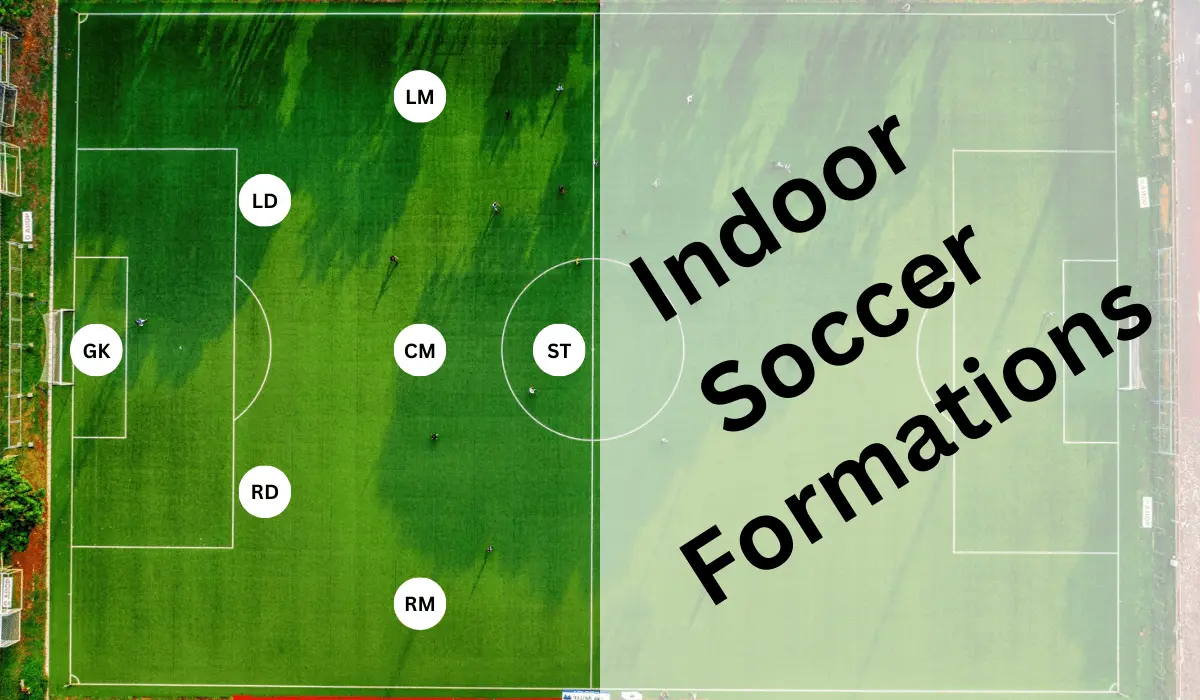
Quick Answer: The most effective indoor soccer formations balance defense and attack while maximizing limited space. For 6v6 (most common), the 2-2-1 provides balance, the 2-1-2 favors attack, and the 1-3-1 controls possession. Choose based on your team’s strengths and opponent tactics.
Understanding Indoor Soccer Formations
Indoor soccer formations differ fundamentally from outdoor soccer due to smaller fields, fewer players, and unique rules like no offsides and unlimited substitutions. The right formation maximizes your team’s strengths while adapting to the fast-paced, wall-assisted gameplay.
Key Factors Affecting Indoor Formations
Space Constraints:
- Smaller playing area (82′ x 49′ to 200′ x 85′)
- Walls keep play continuous
- Tight spaces require quick decision-making
Rule Differences:
- No offside rule allows aggressive positioning
- Unlimited “on-the-fly” substitutions
- Fewer players (typically 5-7 including goalkeeper)
Tactical Priorities:
- Balance over rigid positions
- Quick transitions between attack and defense
- Possession control in confined spaces
- Wall play as a tactical element
List of Formation 5 vs 5, 6 vs 6, 7 vs 7 in Indoor Soccer
Indoor soccer is played with reduced team sizes and limited space compared to the full 11 v 11 outdoor soccer. The amount of space and players on the field have a major impact on selecting an appropriate formation.
5v5 play features tight spaces similar to futsal. Formations like the 1-2-1 and 2-1-1 provide balance with 1-2 strikers, 1-2 midfielders, and 1-2 defenders.
6v6 opens up more possibilities with the extra player. Popular formations like the 2-2-1 and 2-1-2 leverage 2 midfielders, 1-2 defenders, and 1-2 strikers.
7v7 allows for even more versatility. The 2-3-1 and 3-2-1 are common with their strength through the midfield. An extra attacker or defender can be added compared to 6v6.
Mostly Used Indoor Soccer Formations
| Format | Formations | Overview |
|---|---|---|
| 5 vs 5 |
|
Focus on balancing 1-2 defenders, midfielders, and strikers. Excellent for tight spaces. |
| 6 vs 6 |
|
Creative shapes with overloaded midfield or attack. Can provide unique advantages. |
| 7 vs 7 |
|
The extra player allows for a strengthened midfield or attack. Great versatility. |
Let’s look at various formations for 5v5, 6v6, and 7v7 indoor soccer. We will examine the pros and cons of each shape, as well as key tactical considerations for both attacking and defending formations.
Whether you are a player, coach, or spectator, understanding indoor soccer formations is crucial to getting the most out of the unique indoor game because after understanding the formations you’ll be able to understand the game more appropriately.
5v5 Indoor Soccer Formations (Futsal Style)
The 5v5 format is most common in futsal and small indoor facilities. With only four field players plus a goalkeeper, every position matters critically.
1-2-1 Formation (Balanced)
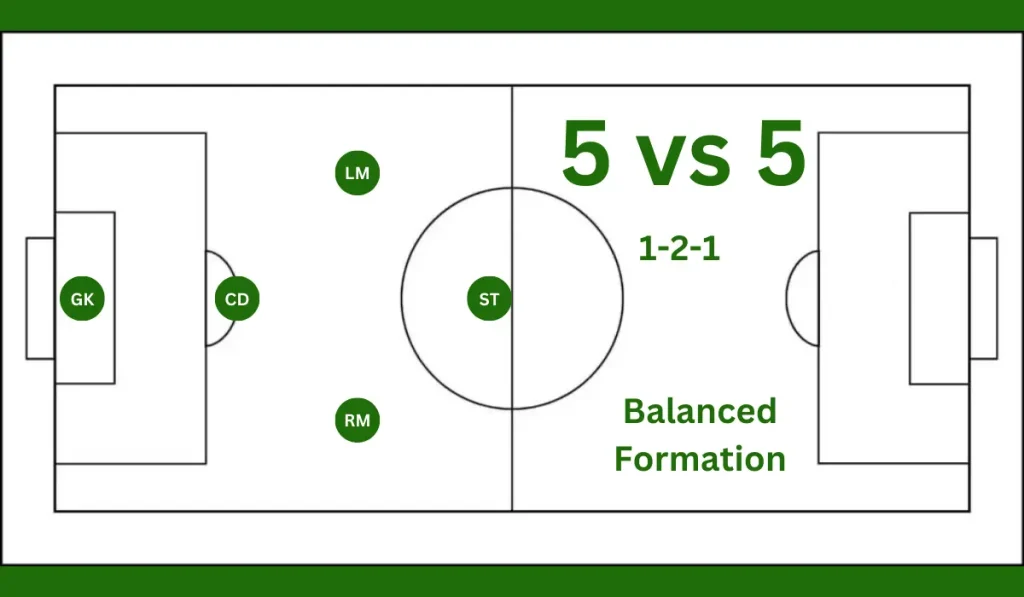
Strengths: ✓ Balanced coverage across the field ✓ Two midfielders control possession effectively ✓ Strong defensive foundation with central defender ✓ Creates passing triangles naturally ✓ Adaptable to different game situations
Weaknesses: ✗ Single defender vulnerable if caught out of position ✗ Lone striker can become isolated ✗ Requires high fitness from midfielders ✗ Limited attacking options if striker is marked tightly
Key Tactical Points:
- Defender: Acts as sweeper and playmaker, initiating attacks from the back
- Midfielders: Must support both attack and defense, requiring excellent stamina and positioning
- Striker: Needs to hold up play, press defenders, and finish chances
When to Use: Competitive matches where you can’t afford to lose but need to maintain attacking threat. Ideal for evenly matched opponents.
1-3-0 Formation (Ultra-Attacking/Possession)
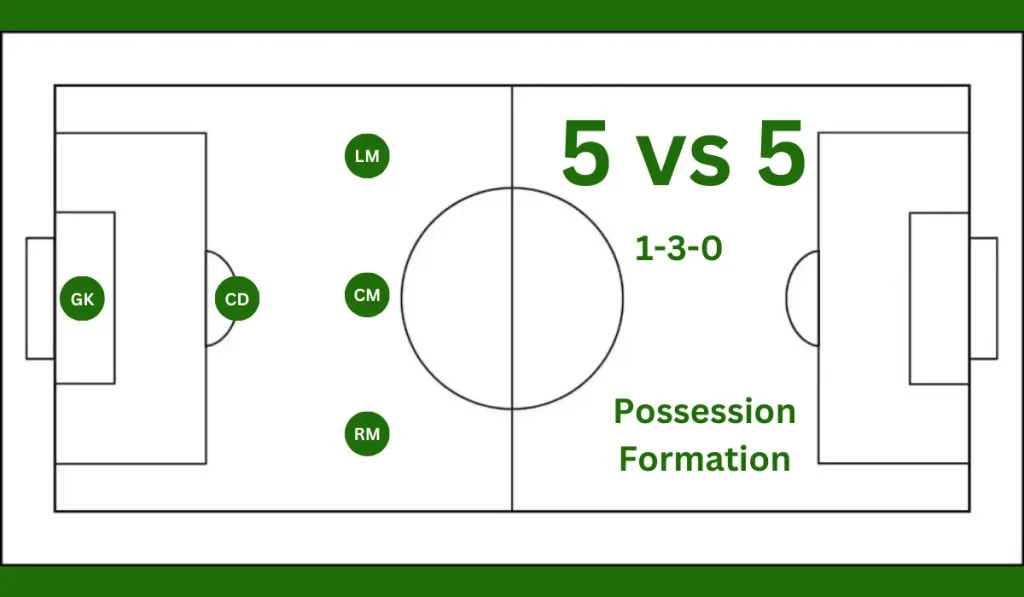
Strengths: ✓ Dominates possession through midfield superiority ✓ Creates numerous passing options ✓ Dictates game tempo ✓ Flexible attacking from multiple players ✓ Overloads central areas
Weaknesses: ✗ Extremely vulnerable to counterattacks ✗ Lone defender under constant pressure ✗ Requires all midfielders to contribute goals ✗ High-risk strategy
Key Tactical Points:
- Midfielders must rotate forward dynamically
- All three midfielders need goal-scoring ability
- Defender requires exceptional positioning and awareness
- Best with a lead late in the game to control possession
When to Use: When chasing a goal, against weaker opponents, or with technically superior players who excel in tight spaces.
2-1-1 Formation (Defensive)
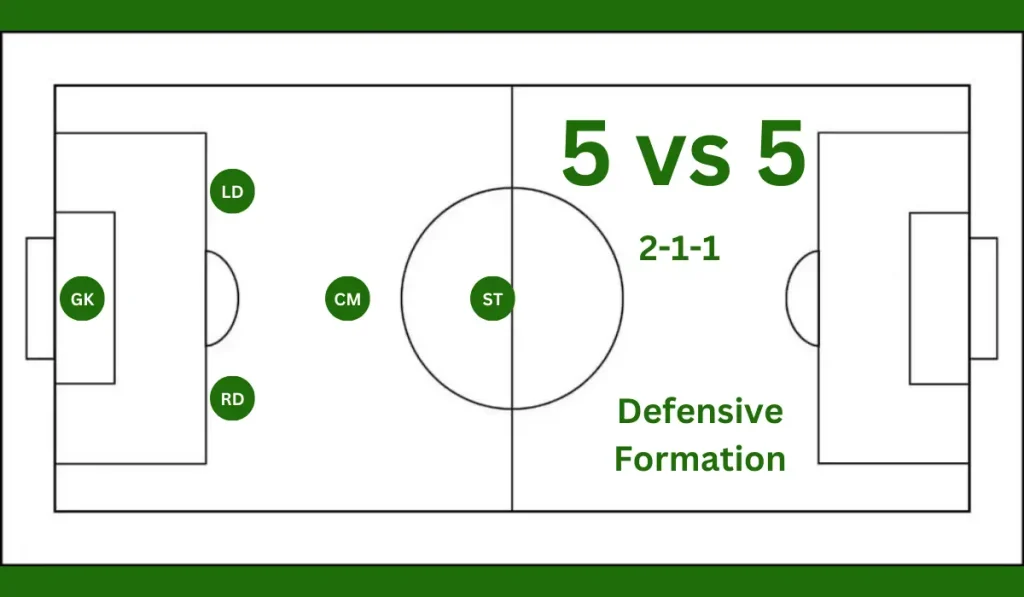
Strengths: ✓ Strong defensive foundation ✓ Two defenders provide security and cover ✓ Effective for counterattacking ✓ Reduced defensive vulnerabilities ✓ Clear roles and responsibilities
Weaknesses: ✗ Limited midfield presence ✗ Can struggle to maintain possession ✗ Midfield easily overrun by numbers ✗ Less attacking threat
Key Tactical Points:
- Defenders can split wide or stay central based on opponent positioning
- Midfielder links defense to attack—critical role
- Striker must work in isolation and finish clinically
- Excellent for last 5-10 minutes when protecting a lead
When to Use: Final stages of a match when protecting a narrow lead, against attacking-heavy teams, or when prioritizing defensive solidity.
6v6 Indoor Soccer Formations (Most Common Format)
Six-a-side is the standard for most indoor soccer leagues, including professional competitions like the MASL (Major Arena Soccer League). The extra player compared to 5v5 opens up more tactical possibilities.
2-2-1 Formation (Balanced Standard)
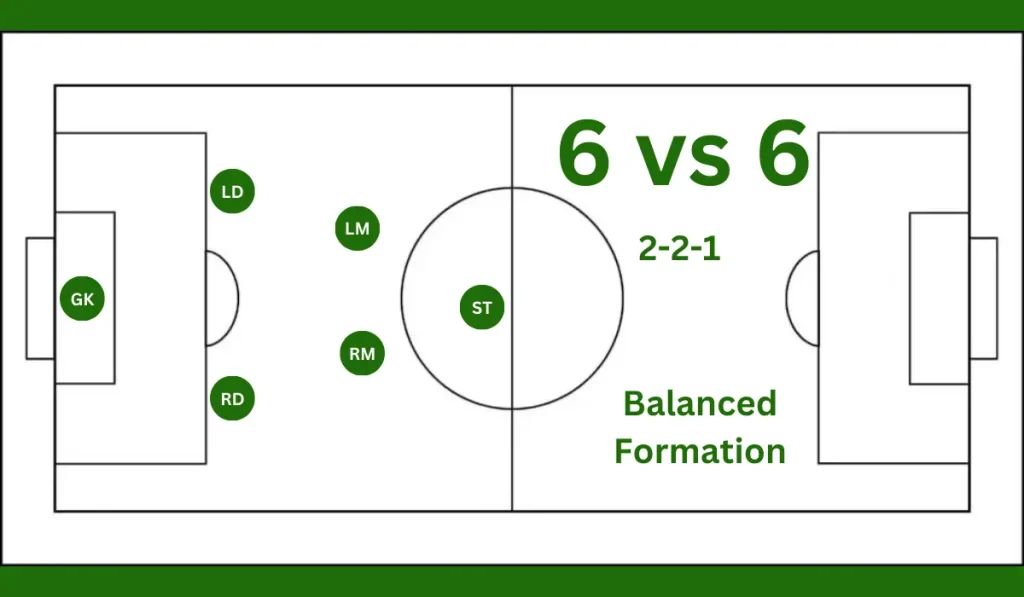
Setup:
- 2 Defenders
- 2 Midfielders
- 1 Striker
Best For: All-around teams with balanced capabilities
Strengths: ✓ Well-balanced between defense and attack ✓ Two midfielders control the center effectively ✓ Solid defensive coverage with two backs ✓ Clear positional structure ✓ Adaptable to various game situations ✓ Easy to execute for less experienced teams
Weaknesses: ✗ Can lack attacking punch with single striker ✗ Midfield can get stretched if pushed too far forward ✗ Predictable setup that opponents can prepare for ✗ May struggle against overloaded midfield formations
Tactical Execution:
Defenders:
- Protect the goal as primary responsibility
- Communicate constantly to cover each other
- One stays deeper while other steps to pressure
- Initiate attacks with accurate passing
Midfielders:
- Provide passing options in all phases
- One sits deeper (defensive mid), one pushes higher (attacking mid)
- Must transition quickly between attack and defense
- Key to maintaining possession and tempo
Striker:
- Pressures opponent defenders when they have possession
- Holds up play to bring midfielders into attack
- Makes runs behind defense (no offside to worry about)
- Primary finishing option
When to Use: Default formation for most teams, especially balanced squads without extreme strengths in attack or defense. Excellent starting point before adjusting based on game flow.
2-1-2 Formation (Attacking)
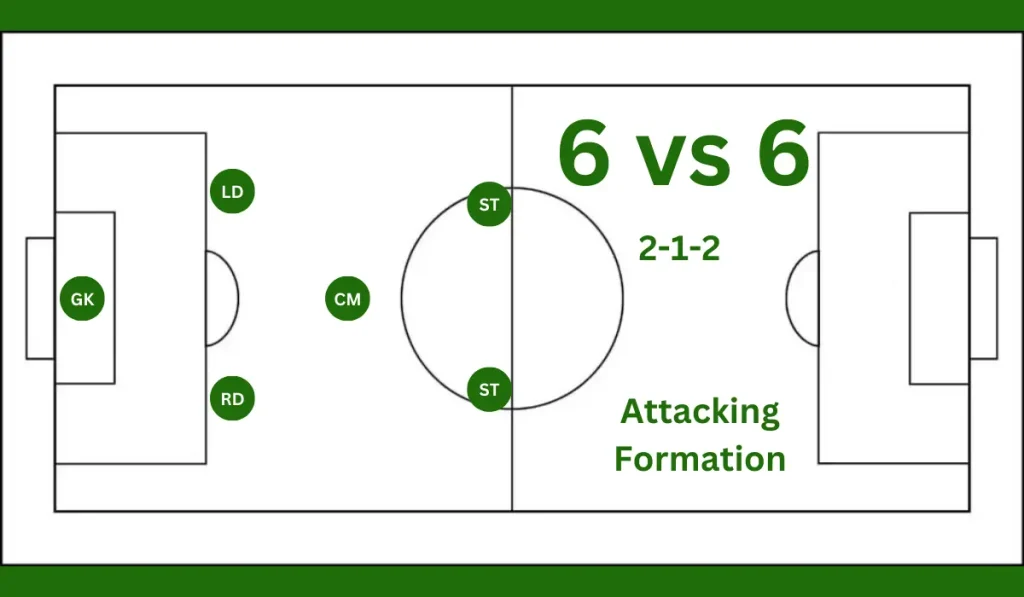
Strengths: ✓ Double attacking threat with two strikers ✓ Striker partnership can create combinations ✓ Puts constant pressure on opponent defense ✓ Exploits no-offside rule with high positioning ✓ More finishing options in the box
Weaknesses: ✗ Midfield easily overrun by opponent numbers ✗ Lone midfielder under immense pressure ✗ Gaps between defense and attack ✗ Vulnerable to possession-based opponents
Tactical Execution:
Lone Midfielder:
- Most demanding position in this formation
- Must cover enormous ground
- Links defense to two strikers
- Requires exceptional fitness and tactical awareness
- Needs to know when to push forward vs. sit back
Two Strikers:
- One acts as target man, one plays off them
- Constant movement to create space for each other
- Interchange positions to confuse defenders
- Both must press aggressively when out of possession
When to Use: When chasing a goal, against defensive opponents, or when you have two quality strikers with good chemistry. Risk-reward formation that can overwhelm opponents but leaves you exposed.
1-3-1 Formation (Possession/Midfield Overload)
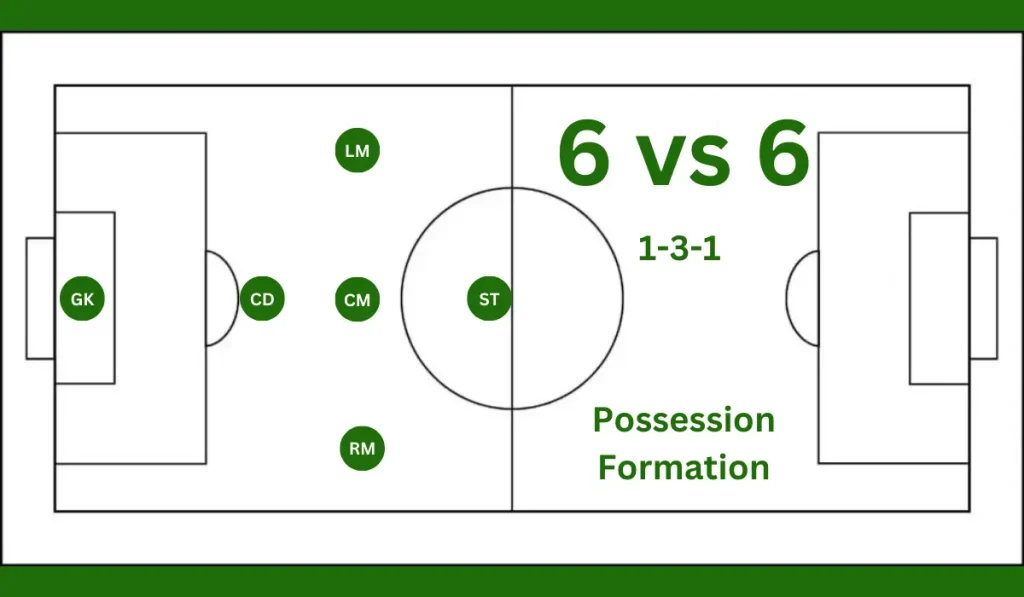
Strengths: ✓ Dominates midfield with numerical superiority ✓ Excellent for keeping possession ✓ Creates multiple passing angles ✓ Controls game tempo ✓ Flexible attacking options as midfielders push forward
Weaknesses: ✗ Single defender extremely vulnerable ✗ High-risk if possession is lost ✗ Requires disciplined midfielders who track back ✗ Demands high technical ability from all players
Tactical Execution:
Lone Defender:
- Must be experienced and positionally excellent
- Acts as last line—cannot make mistakes
- Sweeper role, covering entire defensive width
- Strong communication essential
Three Midfielders:
- Create triangles for passing options
- At least one must stay deeper for defensive cover
- Others rotate forward to support striker
- Quick transitions critical when possession is lost
When to Use: Against weaker technical opponents, when you need to control the game pace, or with players who excel in tight-space passing. Requires high technical ability across the team.
3-1-1 Formation (Ultra-Defensive)
Setup:
- 3 Defenders
- 1 Midfielder
- 1 Striker
Best For: Extreme defensive situations or significant leads
Strengths: ✓ Maximum defensive security ✓ Three defenders can rotate pressure and cover ✓ Difficult to break down ✓ Excellent for soaking up pressure
Weaknesses: ✗ Very limited attacking options ✗ Difficult to maintain possession ✗ Can invite sustained pressure ✗ Lone striker isolated
When to Use: Rarely used except when protecting a multi-goal lead in final minutes or facing extremely attacking opponents where survival is the priority.
7v7 Indoor Soccer Formations
Seven-a-side offers more tactical flexibility with the additional player. Common in recreational leagues and some professional variations.
2-3-1 Formation (Attacking Through Midfield)
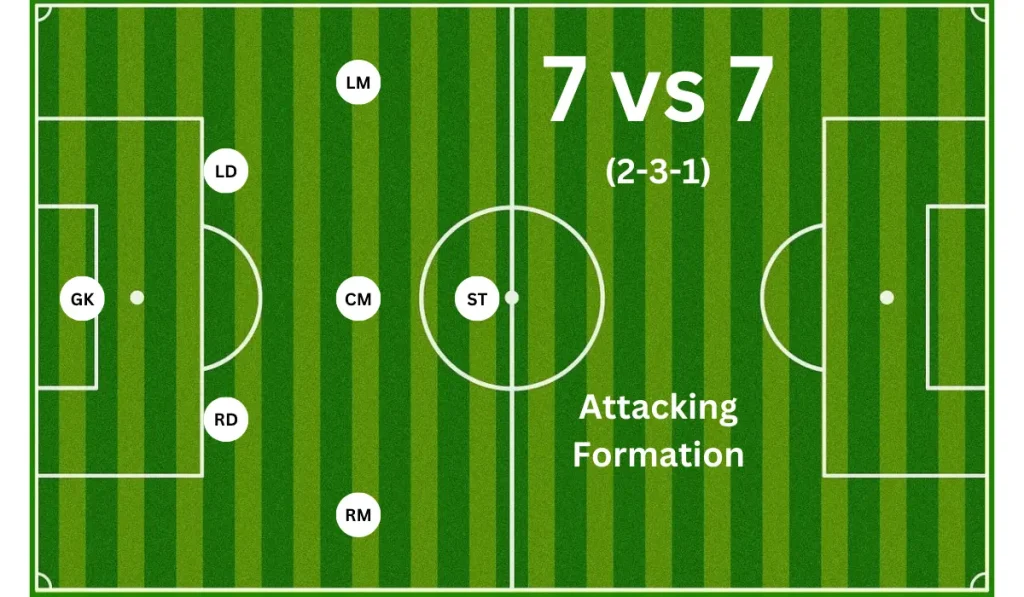
Strengths: ✓ Midfield dominance with three players ✓ Controls possession effectively ✓ Multiple passing options ✓ Balance between attack and defense ✓ Fluid attacking movements
Weaknesses: ✗ Lone striker can be isolated ✗ Requires midfielders with high work rate ✗ Can be outnumbered in defense if midfield caught forward
Tactical Keys:
- Midfielders form triangle patterns constantly
- Central midfielder dictates tempo
- Wide midfielders support both attack and defense
- Striker must be mobile and drop deep when needed
When to Use: Standard attacking formation for 7v7, ideal for possession-based teams with strong midfield players.
3-2-1 Formation (Defensive Stability)
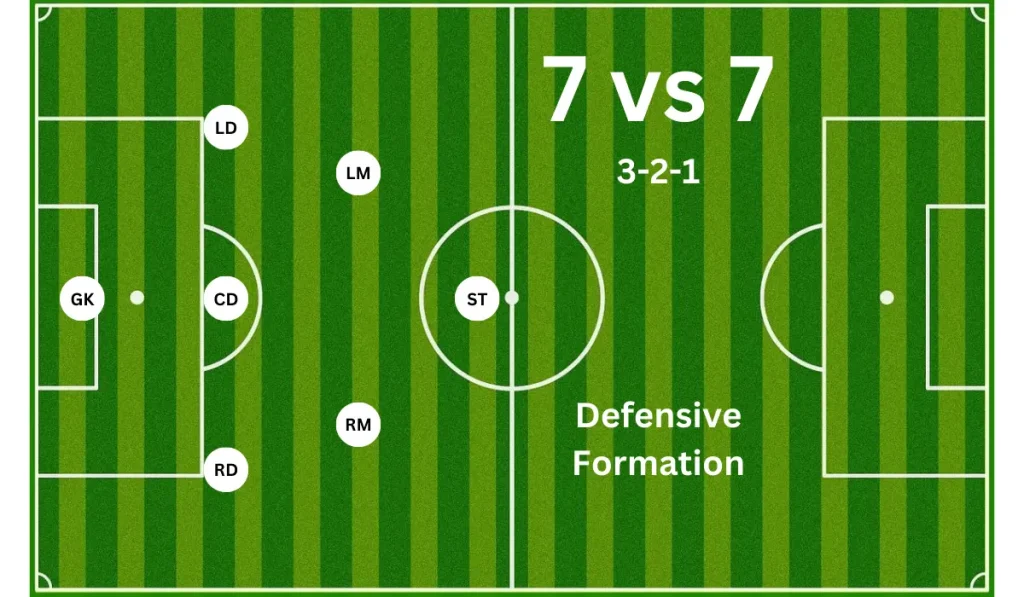
Strengths: ✓ Strong defensive foundation ✓ Three defenders provide excellent coverage ✓ Can absorb pressure effectively ✓ Solid for counterattacking
Weaknesses: ✗ Limited midfield presence ✗ Midfielders can be overrun ✗ Reduced attacking threat
When to Use: Protecting a lead, against strong attacking teams, or when you need defensive organization above all else.
2-2-2 Formation (Balanced)
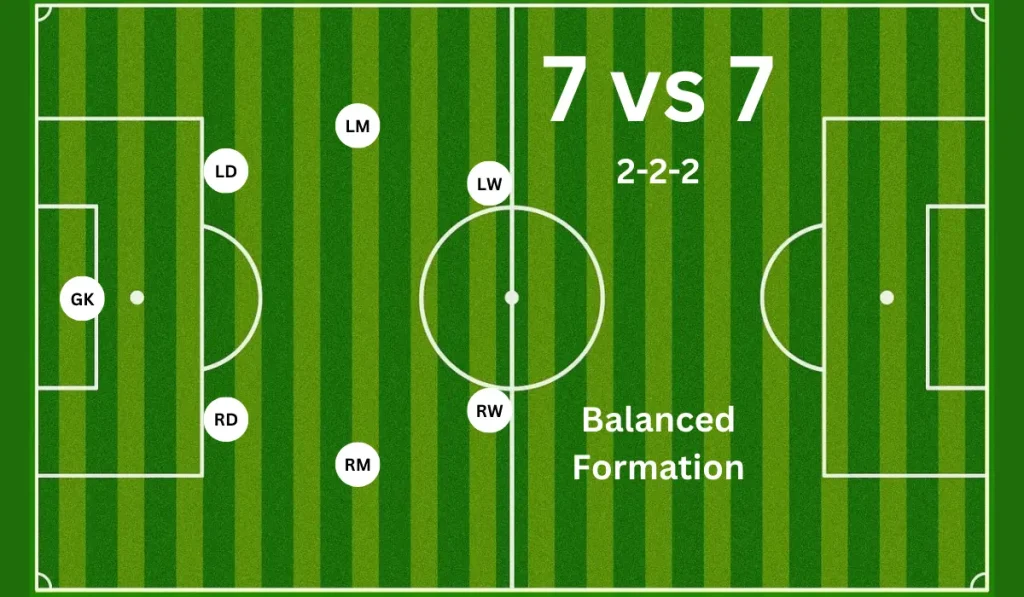
Strengths: ✓ Perfect balance across all zones ✓ Two strikers pressure defense constantly ✓ Clear positional responsibilities ✓ Easy to understand and execute
Weaknesses: ✗ Can be outplayed in midfield by three-midfielder setups ✗ Requires intelligent positional rotation
When to Use: Versatile formation suitable for most 7v7 situations, especially with well-rounded squads.
Possession vs. Counterattacking Styles
Possession-Based Formations
Characteristics:
- 3+ midfielders (1-3-1, 2-3-1)
- Emphasis on ball retention
- Build attacks patiently
- Control game tempo
- Limit opponent opportunities
Key Tactics:
- Quick, triangular passing patterns
- Constant off-ball movement
- Players move into space, not to ball
- Defensive shape maintained through possession
- Press high when possession lost
Best Against: Weaker technical teams, physically aggressive opponents
Counterattacking Formations
Characteristics:
- 1-2 midfielders (2-1-2, 2-2-1)
- Absorb pressure defensively
- Explode forward on turnovers
- Compact defensive shape
- Direct attacking play
Key Tactics:
- Drop deep when defending
- Quick transitions on winning ball
- Direct passes to forwards
- Strikers stay high to stretch defense
- Exploit no-offside rule with runs
Best Against: Possession-heavy teams, opponents who commit numbers forward
Critical Execution Factors for Indoor Soccer Formations
1. Communication
Indoor soccer’s compact space makes vocal communication essential:
- Call for passes early and loud
- Warn teammates of approaching pressure
- Organize defensive shape constantly
- Signal tactical switches (push up, drop back)
- Goalkeeper directs defensive positioning
2. Positional Discipline
Maintaining formation structure prevents defensive breakdowns:
- Don’t chase the ball out of position
- Fill gaps when teammates move
- Understand when to hold vs. step
- Resist temptation to cluster around ball
- Keep proper spacing (8-12 feet between players)
3. Tactical Awareness
Read the game constantly:
- Track opponent positioning
- Identify numerical advantages/disadvantages
- Recognize when to press vs. drop off
- Anticipate passes before they happen
- Adjust to opponent formation changes
4. Intelligent Interchanging
Fluid positional rotation while maintaining balance:
- Swap positions temporarily to exploit gaps
- Return to original position after rotation
- One player moves forward, another drops back
- Coordinate switches verbally
- Don’t leave positions vacant
5. Rapid Recovery Speed
Quick transitions are crucial in indoor soccer:
- Sprint back immediately when possession lost
- First defender pressures ball carrier
- Others recover goal-side of opponents
- Reorganize defensive shape within 3-5 seconds
- Goalkeeper coordinates recovery positions
6. Wall Play Integration
Use walls as an extra player:
- One-touch passes off walls to beat defenders
- Wall passes to advance in tight spaces
- Defensive clearances off walls
- Redirect shots using wall angles
- Practice wall combination plays
Key Indoor Soccer Rules Affecting Formations
No Offside Rule
Impact: Strikers can position themselves anywhere, including directly in front of the goal. This favors attacking formations and requires defenders to mark more tightly.
Unlimited Substitutions
Impact: Fresh legs can maintain high-intensity pressing. Rotate players frequently to keep formations energized.
Smaller Field Size
Impact: Reduces space between players, requiring formations that create passing triangles rather than linear positioning.
Walls Instead of Sidelines
Impact: Play never truly stops, requiring constant defensive awareness and offering creative attacking options.
Reduced Player Numbers
Impact: Every player has more field to cover, making versatility and fitness critical. Single-position specialists are less effective.
Choosing the Right Formation for Your Team
Assess Your Team Strengths
Technical Skills:
- High technical ability → Possession formations (1-3-1, 2-3-1)
- Limited technique → Simpler formations (2-2-1, 2-1-2)
Physical Attributes:
- High fitness → Pressing formations with forwards
- Limited stamina → Defensive formations requiring less running
Experience Level:
- Experienced players → Complex fluid systems
- Beginners → Structured balanced formations
Goal-Scoring Ability:
- Quality finishers → Formations with 2 strikers
- Limited scorers → Midfield-heavy formations
Analyze Your Opponents
Scout Their Style:
- Possession-based teams → Use counterattacking formations
- Direct attacking teams → Use possession to limit their chances
- Weak defense → Commit more players forward
- Strong defense → Patient buildup through midfield
Identify Key Players:
- Mark their best player tightly
- Adjust formation to neutralize threats
- Exploit their weakest position
Adapt to Game Situations
Winning:
- Shift to defensive formation (2-1-1, 3-2-1)
- Maintain possession to run clock
- Drop deeper to protect lead
Losing:
- Switch to attacking formation (2-1-2, 1-3-2)
- Commit more numbers forward
- Take calculated risks
Tied Late:
- Balanced formation for opportunities both ways
- Don’t overcommit but look for winner
- Smart positioning for late push if needed
Common Formation Mistakes to Avoid
❌ Clustering Around the Ball
- Spreads out defensive coverage
- Eliminates passing options
- Creates congestion
✓ Solution: Maintain 8-12 feet spacing, trust teammates to win balls
❌ Static Positioning
- Makes you predictable
- Easy to mark
- Limited passing angles
✓ Solution: Constant movement off-ball, interchange positions intelligently
❌ Over-Committing Forward
- Leaves defense exposed
- Creates counterattack opportunities
- Breaks formation shape
✓ Solution: Always leave at least one defender back, stagger forward runs
❌ Ignoring Defensive Transitions
- Slow to recover when possession lost
- Gives opponents space to attack
- Leads to easy goals against
✓ Solution: First reaction to losing ball is sprint back goal-side
❌ Formation Rigidity
- Fails to adapt to opponent adjustments
- Doesn’t respond to game flow
- Limits tactical flexibility
✓ Solution: Prepare 2-3 formations to switch between during games
Training Your Formation
Practice Patterns
Positional Training:
- Walk through formation slowly
- Identify each player’s zone
- Practice movements without ball
- Understand spacing requirements
Possession Drills:
- Small-sided games in formation
- Maintain shape while keeping ball
- Quick passing in tight spaces
- Practice under defensive pressure
Transition Work:
- Attack-to-defense scenarios
- Defense-to-attack counters
- Recovery runs timed
- Reorganization speed
Set Piece Practice:
- Restart positioning for each formation
- Corner kicks (offensive and defensive)
- Free kicks in dangerous areas
- Goalkeeper distribution patterns
Conclusion: Master Indoor Soccer Through Smart Formations
Indoor soccer formations are your tactical blueprint for success, but they’re only effective when properly executed with communication, discipline, and adaptability.
Key Takeaways:
✓ Start with balanced formations (2-2-1 for 6v6, 1-2-1 for 5v5) as your foundation ✓ Match formations to your team’s strengths, not what professional teams use ✓ Adjust based on game situations—winning, losing, or tied requires different approaches ✓ Practice formations regularly so positioning becomes instinctive ✓ Communicate constantly to maintain shape and organization ✓ Stay flexible—the best formation is one you can adapt from
Remember: formations provide structure, but success comes from intelligent players who understand spacing, transitions, and tactical awareness. The 2-2-1 formation won’t win games by itself—disciplined execution, quick decision-making, and relentless teamwork will.
Start with a simple formation, master the basics, then experiment with variations as your team develops chemistry and tactical understanding. Whether you’re defending like a fortress or attacking like a swarm, the right formation executed properly gives you the foundation to dominate indoor soccer.
Now lace up, communicate with your teammates, and bring your tactical game plan to life on the court!
FAQs of Best Indoor Soccer Formations
1. What is the best indoor soccer formation for beginners?
The 2-2-1 formation is ideal for beginners in 6v6 format. It’s easy to understand with clear positions, provides good balance between attack and defense, and doesn’t require complex tactical understanding. Players can focus on basics like positioning and passing while the structure keeps them organized.
2. Should I use the same formation for the entire game?
No. The best teams adjust formations based on game situations. Start with a balanced formation like 2-2-1, then switch to attacking (2-1-2) when chasing a goal or defensive (2-1-1) when protecting a lead. Flexibility is key in indoor soccer’s fast-paced environment.
3. How do formations differ between indoor soccer and futsal?
While the player counts are similar, futsal formations emphasize more technical skill and possession due to the harder surface and low-bounce ball. Indoor soccer formations often incorporate wall play and are more physically oriented. Futsal uses specific position names (Pivot, Fixo, Alas) while indoor soccer uses traditional soccer positions.
4. What formation works best against a possession-heavy team?
Use a counterattacking formation like 2-1-2 with compact defensive shape. Absorb their possession, stay organized defensively, and explode forward on turnovers with your two strikers. The key is maintaining discipline and not chasing the ball out of position.
5. How many defenders should I have in indoor soccer?
For 6v6, two defenders is standard and provides good balance. Using three defenders (3-1-1) is ultra-defensive and rarely necessary except when protecting large leads. One defender (1-3-1) is high-risk and only works with excellent players and a dominant midfield.